Call us on: +44 (0) 1482 323163
Request a Quote
Global demand for reliable fluid control is increasing across water treatment, oil and gas, power generation, chemical processing, and industrial manufacturing. Check valve systems are essential because they prevent reverse flow, protect pumps, and reduce the risk of pressure shocks. A small disc, spring, or swing mechanism can protect an entire pipeline.
Industry research shows meaningful market momentum. Grand View Research estimates that the global industrial valves market reached approximately USD 76 billion in 2023, with continued growth expected through 2030. A 2024 analysis by Persistence Market Research places the global check valve market at several billion dollars and forecasts steady expansion during the next decade. These figures differ because research firms use different product definitions and regional boundaries. That difference deserves attention.
Valve engineer R. W. Zappe wrote in Valve Selection Handbook, “Check valves are self-acting valves designed to prevent reverse flow.” The principle sounds simple. The selection is not. Buyers must examine pressure class, body material, sealing performance, cracking pressure, temperature range, installation direction, and maintenance access. A valve that performs well in clean water may fail quickly in abrasive slurry or corrosive chemicals.
This guide evaluates China’s top 10 check valve manufacturers for global buyers. It considers manufacturing experience, certifications, testing capacity, export records, customization support, and after-sales reliability. Factory photographs can look impressive. They prove little alone. Practical verification still matters, including inspection reports, material certificates, hydrostatic testing records, and sample performance. The final ranking is therefore useful, but not absolute. Project conditions should always control the purchasing decision.
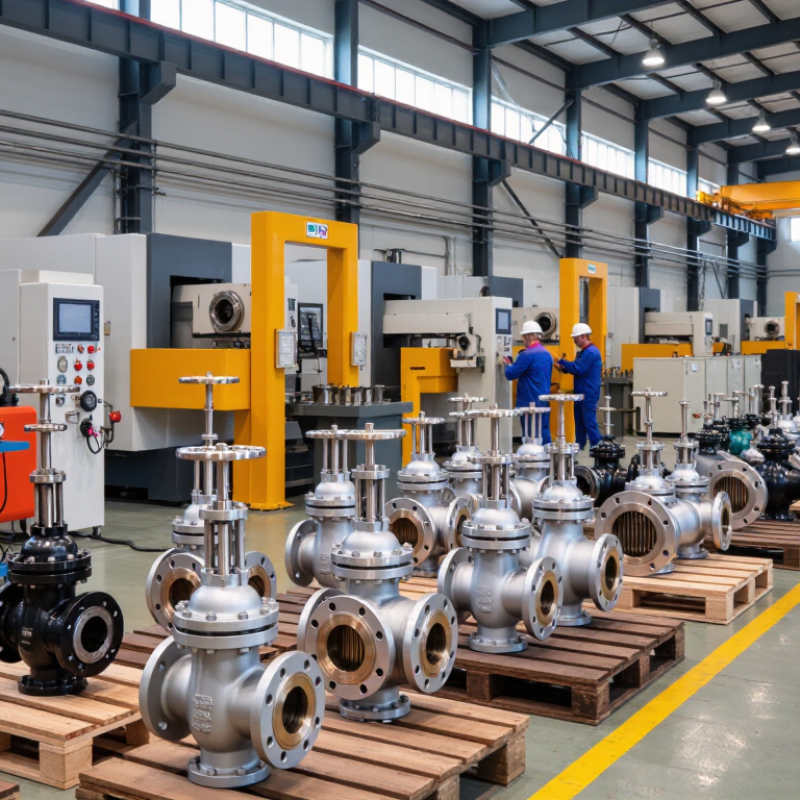
A check valve is a one-way flow control device. It allows fluid to move forward and stops reverse flow. Common designs include swing, lift, wafer, and spring-loaded valves. Each design suits different pressure, temperature, and installation conditions.
China matters to global buyers because its valve industry combines broad manufacturing capacity with competitive production costs. Experienced factories can supply stainless steel, carbon steel, brass, and special alloy options. They also support custom dimensions, connection types, coatings, and pressure ratings. However, low prices alone prove little. Material certificates, pressure-test records, dimensional reports, and traceable batches matter more. A polished catalog cannot replace evidence.
Tips: Confirm the medium, operating pressure, temperature, flow direction, and installation space before requesting quotations. Ask how the manufacturer controls sealing surfaces and spring performance. Verify relevant international standards for your market. A pre-shipment inspection can reveal poor machining, rough castings, or incorrect markings. Do not ignore small details. A valve that looks correct may still leak after repeated cycling. In my experience, buyers sometimes focus heavily on unit price and overlook spare parts, packaging, and delivery stability. That approach needs reconsideration. A realistic supplier evaluation should include samples, factory communication, test documentation, and after-sales responsiveness. Supplier selection is not always perfectly clear. Careful comparison reduces avoidable risk.
A practical comparison of the main check valve product categories, standards, materials, connections, and sourcing considerations for international buyers.
| No. | Check Valve Type | Operating Principle | Common Materials | Typical Connections | Typical Applications | Relevant Standards or Tests | Global Buyer Verification Points |
|---|---|---|---|---|---|---|---|
| 1 | Swing Check Valve | A hinged disc opens with forward flow and closes when reverse flow occurs. | Carbon steel, stainless steel, ductile iron, cast iron, and alloy steel. | Flanged, wafer, threaded, and grooved designs. | Water treatment, industrial pipelines, oil and gas, and general process systems. | API 594, EN 12334, ASME B16.34, and ISO 5208 testing practices. | Confirm flow direction, disc travel, allowable installation orientation, closure performance, and water-hammer risk. |
| 2 | Wafer Dual-Plate Check Valve | Two spring-assisted plates open independently and close quickly to reduce reverse flow. | Stainless steel, carbon steel, ductile iron, and nickel-based alloy options. | Wafer and lug-style installation between flanges. | Power generation, chemical processing, HVAC, water systems, and pipeline services. | API 594, ASME B16.34, EN 12334, and pressure or leakage tests specified by the purchase order. | Check face-to-face dimensions, spring material, minimum opening pressure, disc clearance, and flange compatibility. |
| 3 | Lift Check Valve | A guided piston or disc moves vertically from its seat under forward flow. | Forged steel, cast steel, stainless steel, and corrosion-resistant alloys. | Flanged, threaded, socket-weld, and butt-weld ends. | Steam, refinery, petrochemical, boiler, and high-pressure process lines. | ASME B16.34, ASME B16.5 or B16.25 connection requirements, and API 598 testing. | Verify pressure class, seat design, flow direction, vertical or horizontal installation limits, and internal trim materials. |
| 4 | Piston Check Valve | A piston moves inside a cylinder or guide to control reverse flow and improve seating stability. | Carbon steel, stainless steel, forged steel, and hard-faced trim. | Flanged, threaded, socket-weld, and welded-end configurations. | Steam, gas, liquid hydrocarbon, high-temperature, and high-pressure services. | API 602 may apply to compact forged steel check valve designs; API 598 is commonly used for testing. | Confirm pressure-temperature ratings, piston guidance, seat leakage class, and suitability for pulsating flow. |
| 5 | Tilting-Disc Check Valve | The disc rotates around an offset hinge, providing low resistance and comparatively fast closure. | Carbon steel, stainless steel, ductile iron, and corrosion-resistant alloys. | Primarily flanged designs for larger pipeline diameters. | Large-diameter water pipelines, cooling systems, power plants, and industrial networks. | ASME B16.34, EN 12334, applicable flange standards, and project-specific hydraulic testing. | Request flow-coefficient data, closure-time information, shaft design details, and dynamic stability test results. |
| 6 | Spring-Loaded Inline Check Valve | A spring forces the poppet or disc closed when forward flow falls below the required opening pressure. | Stainless steel, brass, bronze, engineering plastics, and specialty alloys. | Threaded, socket-weld, compression, and compact flanged connections. | Pumps, compressors, instrumentation, chemical dosing, and utility systems. | Product-specific pressure testing, ISO 5208 where specified, and applicable thread or flange standards. | Specify cracking pressure, maximum back pressure, spring alloy, seal compatibility, and pressure-drop limits. |
| 7 | Ball Check Valve | A ball moves away from the seat under forward flow and returns to the seat under reverse flow. | Ductile iron, cast iron, stainless steel, carbon steel, and elastomer-lined options. | Threaded, flanged, wafer, and union-end connections. | Wastewater, sewage, slurry, drainage, pumping stations, and low-maintenance utility systems. | EN 12334, applicable pipe-connection standards, and project-specific leakage tests. | Check solids-handling capability, ball coating, anti-clogging performance, installation position, and maintenance access. |
| 8 | Nozzle or Axial Check Valve | An axially guided disc or nozzle assembly closes along the pipeline centerline for rapid response. | Carbon steel, stainless steel, duplex stainless steel, and nickel alloys. | Flanged and butt-weld ends, commonly for process and pipeline systems. | Compressor discharge, gas pipelines, LNG-related systems, chemical plants, and high-speed flow lines. | API 6D may apply to pipeline valve applications; API 598 or project specifications may govern testing. | Request transient-flow analysis, pressure-drop curves, noise data, material certificates, and low-temperature qualifications where relevant. |
| 9 | Foot Valve with Strainer | A check valve retains liquid in the suction line while an integrated screen limits debris entry into the pump. | Cast iron, ductile iron, bronze, stainless steel, and thermoplastic materials. | Threaded, flanged, and socket connections. | Well pumps, irrigation, water storage, agricultural systems, and small pumping installations. | Applicable product standards, pipe-thread or flange standards, and hydrostatic or leakage testing. | Confirm mesh size, open-area ratio, suction pressure loss, corrosion resistance, and ease of screen cleaning. |
| 10 | Sanitary Check Valve | A hygienic spring-loaded or disc mechanism prevents reverse flow while minimizing product-hold areas. | Typically 304 or 316L stainless steel with food-grade elastomer seals. | Tri-clamp, butt-weld, orbital-weld, and other hygienic connections. | Food and beverage, dairy, pharmaceutical, biotechnology, and clean-process systems. | 3-A, EHEDG, ASME BPE, FDA-compatible material requirements, and sanitary surface-finish specifications where applicable. | Verify surface roughness, elastomer documentation, clean-in-place capability, drainability, weld quality, and hygienic certification. |



© Shipham Valves 2025. All Rights Reserved.
Website By PS Website Design Ltd
Request a Quote/Further Information
Download