Why Choose a Swing Check Valve for Global Projects? The answer begins with one practical concern: controlling reverse flow reliably across changing operating conditions. A swing check valve uses a hinged disc that opens with forward flow and closes when flow reverses. Its design is simple. That matters.
In international projects, simplicity can reduce maintenance confusion. A properly selected swing check valve can support pipelines, water treatment systems, pump discharge lines, and industrial process networks. Its full-port passage may create relatively low pressure loss when fully open. In the field, this can mean steadier pump performance and fewer unnecessary energy concerns. However, it is not suitable for every installation. Rapid flow reversal may cause disc slam, vibration, or damaging water hammer. The selection must consider velocity, back pressure, fluid cleanliness, installation angle, and closure speed.
Greg Johnson, a respected valve-industry educator and author, has stated, “Valve selection should begin with the process, not the catalog.” That principle is especially valuable for global projects. A valve chosen only by size or price may fail the real application. Material compatibility, pressure class, inspection records, spare-parts access, and local maintenance skills also deserve attention. Standards help, but standards do not replace engineering judgment.
Real projects are rarely perfect. Drawings change. Delivery schedules tighten. Field conditions disagree with assumptions. Therefore, engineers should verify the actual flow regime and review the valve’s installation orientation before approval. A swing check valve can be a dependable choice, but only when its limits are understood. Reliability is designed, not promised.

Why Choose a Swing Check Valve for Global Projects?
What Is a Swing Check Valve and How Does It Work?
A swing check valve uses a hinged disc to control one-way flow. Fluid pressure pushes the disc open. When flow slows or reverses, gravity and backpressure move it onto the seat. This simple action helps protect pumps, pipelines, and storage equipment from reverse flow. The design works especially well in horizontal pipelines with moderate flow changes.
Its internal movement is easy to understand. Picture a metal disc lifting like a small door when water enters. When the pump stops, the disc closes against the seat. However, closure may create water hammer if the disc travels too slowly. The U.S. Department of Energy reports that pumping systems can consume 25–50% of industrial facility electricity. A suitable check valve can support system efficiency, but it cannot correct poor pipe sizing or unstable pump operation. That limitation deserves attention.
Tips: Confirm the installation direction and pipeline position. Keep the hinge accessible for inspection. Check the valve’s pressure rating, temperature range, and seat material. For wastewater or solids, review the disc clearance carefully. Field experience shows that debris can prevent full closure, even when the valve appears correctly selected. Datasheets help, but actual operating conditions often tell the harder truth.
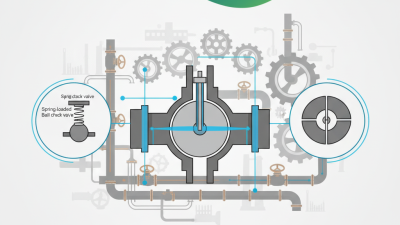
Swing check valves suit global project requirements because their design is simple, familiar, and adaptable. A hinged disc opens with forward flow and closes when flow reverses. This creates a clear mechanical response without external power.
In large water, wastewater, and process lines, the broad flow path can reduce pressure loss. That matters when pumps operate across long distances. Maintenance teams also recognize the internal arrangement quickly. Fewer specialized tools can simplify work in remote locations.
Global projects face varied standards, climates, and operating habits. A suitable valve should match the pipeline orientation, fluid, pressure class, and temperature range.
Swing designs commonly fit horizontal lines and selected vertical upward-flow applications. They are not automatically right for pulsating flow or frequent reversal.
Not always. Site engineers should review closing speed and potential water hammer. A disc that closes too late may create a damaging pressure surge. This detail is easy to miss during catalogue-based selection.
Reliable procurement depends on evidence, not appearance. Request material certificates, pressure-test records, coating details, and traceable inspection documents. Testing can be checked against recognized requirements such as ISO 5208 or API 598, where the project specification permits.
In cold regions, seals and body materials need suitable low-temperature performance. In coastal areas, corrosion protection deserves equal attention. Field inspections often find problems at gaskets, hinges, and lifting points rather than the main body.
A practical review should include installation clearance, spare parts, and local service capability. The review may even reject the swing design; that is sometimes the safer engineering decision.
A swing check valve can protect pumps and pipelines from reverse flow. Its disc moves with the fluid, creating low resistance during normal operation. This matters in long water, cooling, and process lines.
FAO reports that agriculture uses about 70% of global freshwater withdrawals. Irrigation projects therefore need reliable flow control, especially when pumps stop suddenly.
Fluid selection changes the design decision. Clean water may allow a standard metal seat and moderate closing speed. Wastewater can contain solids, fibers, or grit. A guided disc, wider passage, and accessible cover may reduce blockage risk.
For oil, gas, and chemical service, engineers should review temperature, viscosity, corrosion, and pressure cycling. The Energy Institute’s Statistical Review of World Energy 2024 shows oil and gas still provide more than half of global energy supply. That scale increases the need for carefully specified isolation and backflow protection.
Operating conditions deserve equal attention. Water hammer can occur when the disc closes too slowly. Fast closure can also create a pressure shock. API 6D, ASME B16.34, and ISO 5208 provide useful requirements for design, materials, and testing.
Field experience suggests that horizontal installation often supports stable disc movement, but site piping can complicate this assumption. A valve that performs well in clean water may struggle with abrasive slurry.
Engineers should verify velocity limits, allowable back pressure, and maintenance access before approval. The specification may still be imperfect. Testing under realistic fluid conditions remains wiser than trusting a datasheet alone.
A swing check valve suits global projects when flow direction is stable and pressure loss matters. Its disc opens with forward flow, then closes by gravity or reverse flow. That simple motion can reduce turbulence and maintenance points. It can also slam if closing speed is poorly matched. Field experience matters here.
International specifications should define more than valve size. API 6D supports pipeline valve design, while ASME B16.34 addresses pressure-temperature ratings and construction requirements. ISO 5208 provides pressure-testing methods. Buyers should request test records, dimensional checks, and EN 10204 3.1 material certificates. Regional rules may also require conformity assessment, such as the Pressure Equipment Directive in Europe.
Material selection follows the medium, temperature, and corrosion risk. Carbon steel may suit dry hydrocarbons, while stainless or duplex grades support harsher service. Elastomer compatibility needs written confirmation, not assumptions. The NACE IMPACT study estimated global corrosion costs at 3.4% of global GDP, or about 2.5 trillion dollars annually. That figure makes surface protection and inspection traceability practical priorities. The 2024 United Nations World Water Development Report notes agriculture uses roughly 70% of global freshwater withdrawals, highlighting the need for dependable water-control equipment. Certification is not a guarantee of perfect field performance. It is evidence of controlled manufacturing. Design reviews should still challenge the selection.
Swing check valves are commonly selected for international projects because their non-return function can be specified through recognized standards, pressure designations, material specifications, and inspection requirements. The chart shows EN 1092-1 PN flange pressure designations commonly used when matching valve connections to piping systems.
Project specifications may also reference API 594 or EN 12334 for check-valve requirements, ASME B16.34 for pressure-temperature design, ISO 5208 or API 598 for pressure testing, and ASTM material standards such as A216 WCB, A351 CF8M, or A352 LCC. PN values are nominal designations and must not be treated as direct equivalents to ASME Class ratings.
Selecting a swing check valve starts with the medium, pressure, temperature, and flow direction. Field experience shows that incorrect sizing causes noise, vibration, and premature seat damage. Choose a valve with a pressure rating matching the pipeline design, not merely its normal operating pressure. The disc should close smoothly at low reverse flow. This reduces water hammer risk.
UNESCO’s 2024 World Water Development Report states that agriculture accounts for about 70% of global freshwater withdrawals. Irrigation projects therefore need reliable backflow protection and corrosion-resistant materials. The U.S. Department of Energy notes that pumping systems may consume 25–50% of industrial facility electricity. Avoiding unnecessary pressure loss is not a minor detail.
Install the valve in the manufacturer-approved orientation, usually with the hinge above the flow path. Keep the disc clear of elbows, pumps, and sudden reducers. Turbulence can make the disc chatter. Provide enough straight pipe where the project specification requires it. Verify the arrow before tightening bolts. It sounds obvious. It is still missed.
Maintenance should follow operating hours, fluid quality, and local inspection requirements. Check the hinge, pin, disc, seat, and body for wear or deposits. API 594 and ASME B16.34 provide useful inspection and pressure-boundary guidance. Record leakage, closure noise, and unusual vibration during each inspection. A practical weakness is relying only on visual checks. Internal damage can remain hidden until shutdown testing. Replace damaged sealing parts with compatible materials, then confirm tightness under controlled conditions.
© Shipham Valves 2025. All Rights Reserved.
Website By PS Website Design Ltd
Request a Quote/Further Information
Download
We use cookies on this website, by continuing to browse the site you are agreeing to our use of cookies. Find out more.