Why Choose a Flanged Butterfly Valve?
A flanged butterfly valve can look simple, yet its performance depends on careful selection. Its compact body, quarter-turn operation, and low weight make it attractive for water systems, HVAC networks, fire protection, and selected process lines. However, convenience should never replace engineering judgment. The valve must match the pipeline’s pressure, temperature, fluid, flange standard, and operating frequency.
Valve specialist Jim Cahill has shared a practical principle: “The right valve depends on the application, not the product label.” That advice fits the flanged butterfly valve especially well. A resilient-seated model may serve clean water effectively, while a high-performance or metal-seated design may better withstand heat, pressure, or abrasive service. The flange connection also offers a stable installation point. It can simplify alignment and future removal when maintenance crews face a crowded equipment room.
Small details matter. Check disc clearance before installation. Confirm the actuator’s torque range. Inspect the gasket surface. A valve that fits on paper may still create trouble in the field. That is the uncomfortable part.
No valve is universally superior.
A thoughtful comparison should examine shutoff reliability, pressure loss, material compatibility, maintenance access, and total operating cost. In my experience, rushed purchases often focus only on size and price. That approach can overlook corrosion, cycling demands, or poor flange alignment. Choosing a flanged butterfly valve is therefore less about selecting a popular design and more about building dependable performance into the entire piping system.
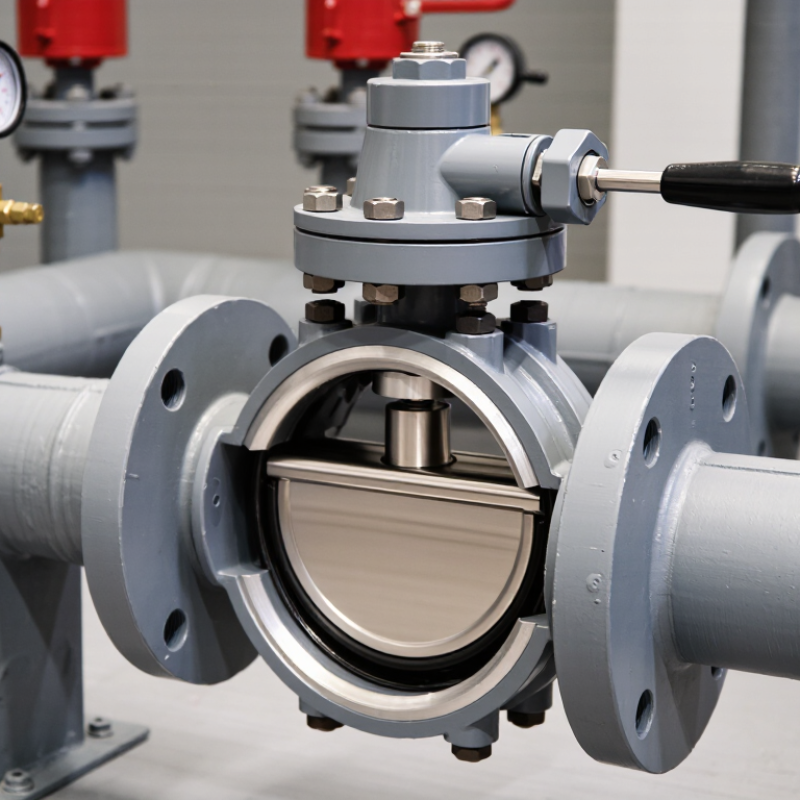
A flanged butterfly valve controls flow through a simple 90° quarter-turn. The disc rotates from open to closed with one compact movement. This action enables fast isolation during maintenance or emergency response. It also reduces actuator travel compared with multi-turn valves. Operators can see the position clearly at the stem or actuator. That physical feedback matters in busy pump rooms.
Flanged connections provide stable alignment between the valve and adjoining pipework. Bolted joints also support easier removal during inspection. In practical maintenance, this can shorten replacement work and reduce disruption.
The U.S. Department of Energy’s Improving Pumping System Performance sourcebook reports that pumping systems may consume 25–50% of industrial facility electricity. Efficient flow control can therefore support wider energy-management goals. Small losses still matter.
The design is not perfect. A partially open disc creates turbulence and pressure loss. Poor sizing may cause vibration, noise, or accelerated seat wear. The International Energy Agency reported that industry used about 37% of global final energy in 2022. That figure strengthens the case for careful valve selection.
However, a butterfly valve is not suitable for every service. Engineers should check pressure, temperature, media compatibility, cavitation risk, and cycling frequency. A 90° movement is fast. Good engineering makes it reliable.

Why Choose a Flanged Butterfly Valve?
API 609 Categories A and B: Selecting the Right Butterfly Valve Type
A flanged butterfly valve offers stable connection and easier alignment on larger pipelines. Its bolted joint also supports inspection, removal, and controlled gasket compression. However, a flange does not automatically make every valve suitable for demanding service.
API 609 Category A commonly covers concentric butterfly valves with resilient seats. These valves suit many water, air, and general utility applications. Their compact body and moderate operating torque can simplify installation. Check the actual pressure, temperature, and seat material before selecting one. A low-cost seat may harden quickly in hot service.
Category B generally covers higher-performance designs, often with offset discs and engineered sealing systems. These valves can reduce seat wear during frequent cycling. They may also handle higher pressure or temperature ranges, depending on the construction. The specification alone is not enough. Review the pressure-temperature chart, shaft design, disc clearance, and required shutoff class.
In field inspections, flange faces often reveal the real installation problem. Uneven bolts, damaged gaskets, or poor pipe alignment can cause leakage. Category B may seem excessive for clean water. Yet repeated cycling can justify its added cost. I have also seen Category A selected for chemical service without checking compatibility. That mistake looked small on paper, but the seat failed early. Verify the medium, operating cycle, flange standard, and actuator torque with qualified engineering personnel.
ASME B16.34 pressure classes help engineers match valve ratings with real system conditions. Class 150, 300, and 600 are not simple pressure labels. Each rating depends on temperature and material. Temperature changes everything.
A flanged butterfly valve can provide compact flow control, low weight, and easier maintenance access. However, its pressure class must suit the piping system, flange connection, and operating medium. Start with the maximum working pressure, design temperature, and pressure surges. Then check the pressure-temperature tables for the valve body material. A Class 150 valve may handle a demanding service at moderate temperatures, but its allowable pressure can decline sharply as temperature rises.
Seat material also matters. Elastomer seats may offer reliable sealing in clean, moderate-temperature services. They may perform poorly with aggressive chemicals, high heat, or frequent cycling. Metal-seated designs can tolerate harsher conditions, yet they may require greater attention to leakage requirements and torque. Do not guess.
In practical selection, compare the valve rating with pump shutoff pressure, hydrostatic test pressure, and possible water hammer. Confirm that the mating flanges, bolts, gasket, and actuator meet the same service requirements. ASME B16.34 provides a design and rating framework, but it does not replace a complete application review. I have seen specifications focus on Class 300 while overlooking temperature derating and flange compatibility. That mistake is easy to make. A pressure class should be treated as one part of the decision, not the entire decision.
Space is often limited in pump rooms, treatment plants, and process skids. ISO 5752 defines standardized face-to-face dimensions for many valves installed between flanged pipe sections. For a butterfly valve, the correct dimension keeps the body within the planned pipe gap. This reduces rework and simplifies nearby support placement. Compact does not mean careless.
During installation, select the correct nominal size and dimensional series. Check the valve drawing before cutting or adjusting the pipe spool. Leave enough clearance for disc rotation, actuator travel, bolt tightening, and gasket compression. ISO 5752 addresses face-to-face dimensions, but it does not define every flange connection detail. Flange drilling, pressure rating, and gasket selection still require separate verification. Misalignment can force the disc against the liner or create uneven sealing stress. That issue may appear only after several operating cycles.
Reliable selection also requires checking media temperature, shaft orientation, and isolation requirements. An experienced installer dry-fits the valve, confirms flange parallelism, and checks disc movement before final tightening. One detail is easy to overlook: published dimensions can be exact, while field tolerances are not. Pipe strain, damaged gaskets, or uneven bolt torque can undermine a precise specification. A technically correct selection can still fail in practice. A second measurement is worth the time.
Why Choose a Flanged Butterfly Valve?
EN 593 Testing and Materials for Reliable Industrial Service
Flanged butterfly valves suit water, cooling, and process pipelines where space matters. EN 593 defines important design and performance requirements for industrial metallic butterfly valves. It helps engineers compare products using consistent technical expectations.
Testing is not merely paperwork. Pressure tests can reveal seat leakage, body weakness, or poor shaft sealing. Inspectors should check the test medium, pressure level, duration, and recorded results. EN 593 commonly works alongside referenced valve testing procedures, so the exact test standard deserves attention. Small details matter.
Material selection depends on the service, not appearance. Ductile iron can serve many water applications, while carbon steel handles greater mechanical demands. Stainless steel may resist corrosive fluids, but it is not automatically suitable for every chemical. Seat materials also need careful review. EPDM, NBR, and PTFE behave differently under temperature, pressure, and fluid exposure.
Field experience often exposes the gap between a specification and reality. A valve may pass a factory test yet fail after dirty water damages the seat. Misaligned flanges can create stress, too. I have seen installation quality undermine good engineering. EN 593 supports reliable design, but maintenance records, torque checks, and correct material identification remain essential. Some projects still choose materials by habit, which is convenient but difficult to defend.
Flanged butterfly valves designed to EN 593 are commonly selected for compact, quarter-turn isolation and control duties in water, HVAC, process, and industrial piping systems. The chart shows representative shell and seat test pressures calculated from common PN pressure ratings using the EN 12266-1 test ratios of 1.5 × PN for shell testing and 1.1 × PN for seat testing.
Pressure values are shown in bar: PN10, PN16, and PN25 correspond to nominal pressure ratings of 10, 16, and 25 bar at the applicable reference temperature. Actual allowable pressure depends on valve design, temperature, sealing material, body and disc materials, and the project specification.
© Shipham Valves 2025. All Rights Reserved.
Website By PS Website Design Ltd
Request a Quote/Further Information
Download
We use cookies on this website, by continuing to browse the site you are agreeing to our use of cookies. Find out more.