Why Choose an Insulation Wrapping Machine?

Insulating wire, cable, or metal components by hand requires steady pressure, clean overlaps, and repeatable tension. Small inconsistencies can leave gaps, wrinkles, or uneven coverage. An Insulation Wrapping Machine helps control these steps by feeding material at a consistent rate and guiding it around the workpiece. For repeated production runs, that control can support more uniform wrapping and reduce avoidable rework. Details matter.

The right machine depends on the material, product dimensions, required wrap pattern, and daily output—not simply its advertised speed. A buyer should check whether the equipment handles the intended tape width and material thickness, and whether operators can adjust tension and wrapping settings safely. Ask for a sample run using your actual workpiece. Watch the overlap, edge alignment, and finished surface. A neat sample tells you more than a brochure.

Automation can also make production easier to repeat and help operators spend less time on repetitive handling. Yet it is not a cure-all. Setup, routine maintenance, and staff training still affect results, and an unsuitable machine may add complexity instead of removing it. Compare the complete workflow, including loading, changeovers, and quality checks. The practical question is not whether a machine is automated, but whether it delivers reliable insulation coverage for your specific application. A little skepticism helps.
Why Choose an Insulation Wrapping Machine?

What an Insulation Wrapping Machine Is

An insulation wrapping machine applies insulating material around a product in a controlled, repeatable way. Depending on its design, it may handle tape, foil, or flexible insulation sheet. Common applications include electrical wires, pipes, and selected industrial components. Not every machine suits every material or shape.

A typical system has a feed mechanism, tension controls, a wrapping head, and a way to guide or hold the product. The material unwinds as the product moves or rotates, forming overlapping layers. On a pipe, for example, the operator may adjust feed speed and tension to keep the wrap even around bends and joints. Small adjustments matter. Too much tension can stretch or damage the insulation; too little may leave loose sections.

Some machines are manually loaded, while others automate parts of the process. Operators still need to check material alignment, layer overlap, and finished coverage. A machine can improve consistency, but it cannot correct every setup mistake. The result is not automatically perfect. Worn rollers, a misaligned feed, or a change in material thickness can produce gaps that are easy to miss at a glance. Regular inspection helps catch these issues before wrapped products move to the next stage.
How an Insulation Wrapping Machine Works

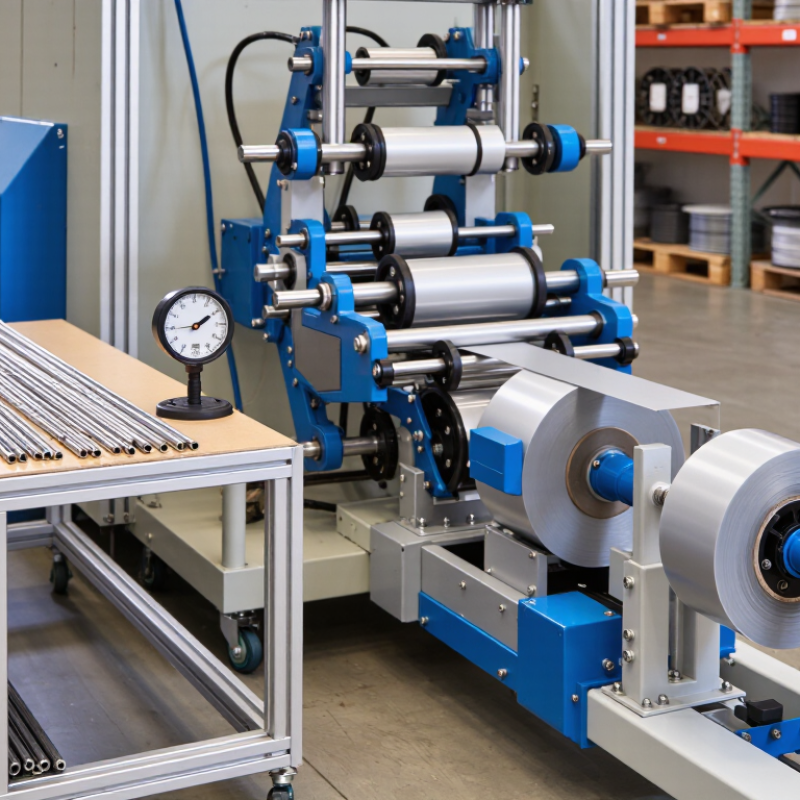
An insulation wrapping machine turns a measured roll of insulation and a covering material into a consistent wrapped section. The operator sets the material width, overlap, feed speed, and wrapping tension for the product. Rollers guide the insulation around a pipe, cable, or other component. A rotating head or moving feed mechanism then applies the outer film, foil, or tape. The exact arrangement varies by machine and material. Small gaps matter.

Sensors may track feed position and tension, while a cutter trims the material at the required length. Some machines seal or press the edge; others leave that task to an operator. A practical check is to inspect the first wrapped piece for loose edges, uneven overlap, and crushed insulation before running a full batch. Automation can improve repeatability, but it cannot correct poor material setup.

The IEA’s Energy Efficiency 2023 report estimates that industry accounted for about 37% of global final energy use in 2022. That figure describes the wider industrial context, not savings from wrapping machines.

Properly fitted insulation can help limit heat transfer, while a machine supports consistent application. Results still depend on insulation choice, fit, operating conditions, and routine checks.

In real production, even a well-adjusted line can drift. That deserves attention.

Materials and Products It Can Process

Why Choose an Insulation Wrapping Machine?

Materials and Products It Can Process

Insulation wrapping machines can handle several blanket and sheet materials, but compatibility depends on the machine’s feed system, tension settings, and wrapping method. Common options include glass wool, mineral wool, ceramic-fiber blankets, and flexible foam. Foil, kraft paper, or textile facings may also be applied, depending on the product design. Fit matters. A brittle facing or uneven blanket can crease, tear, or leave gaps.

The International Energy Agency’s Global Status Report for Buildings and Construction 2024 reports that buildings used 32% of global energy and produced 34% of energy-related carbon dioxide emissions in 2023. That context makes insulation quality significant, though a wrapping machine alone cannot guarantee thermal performance. Consistent coverage and secure seams help protect the insulation layer; material choice and installation still matter.

Typical products include insulated pipe sections, straight duct runs, elbows, and other fabricated components. Some setups can wrap larger cylindrical items, such as tanks, when the machine’s dimensions and tooling allow it. Check the product’s diameter, shape, thickness, and facing before selecting equipment. A line may run neatly with straight pipes yet struggle with tight bends. That limitation is easy to overlook. Output quality should be checked for wrinkles, exposed edges, and loose overlaps.

Key Benefits of Using an Insulation Wrapping Machine

An insulation wrapping machine helps apply protective material evenly around pipes, ducts, or other components. Consistent tension and overlap can reduce loose edges, exposed seams, and time-consuming hand adjustments. That matters on a busy line, where small inconsistencies can create rework. The International Energy Agency reports that industry accounts for about 37% of global energy use. This is a broad sector figure, not a promised saving from any one machine. Still, reliable insulation coverage supports efforts to limit heat loss in suitable applications.

Automation can also make output more repeatable across shifts. Operators can set wrapping speed and material tension, then check the finished seam and coverage. Fewer repetitive hand movements may ease daily work, though training and maintenance still matter. It is not a perfect fix. Poorly matched materials or incorrect settings can cause wrinkles, gaps, or wasted wrap. A short production trial is often more useful than trusting a catalogue estimate.

Tips: Check material width, component diameter, and required overlap before setup. Inspect a sample wrap at the start of each run. Record settings that produce a smooth, secure finish.

Why Choose an Insulation Wrapping Machine? - Key Benefits of Using an Insulation Wrapping Machine
Benefit How the Machine Helps Practical Impact Useful Performance Measures Important Consideration
More consistent wrapping Controlled rotation and material feeding can help maintain more uniform wrap placement and overlap than unstandardized manual work. Consistent application can support repeatable product appearance and reduce variation between operators or production runs. Wrap overlap, spacing, coverage, and finished-product inspection results. Results depend on correct setup for the product dimensions and insulation material.
Higher production capacity Automated or powered wrapping can reduce the time spent applying insulation to each workpiece. May increase output when wrapping is a bottleneck and the machine is matched to the required process. Units completed per shift, cycle time, and machine availability. Actual output varies with product size, material changes, loading time, and operator workflow.
Reduced repetitive manual work The machine performs or assists with repeated rotation and material application. Can reduce repetitive hand movements associated with manual wrapping. Manual handling steps, operator feedback, and ergonomic risk assessments. Safe operation still requires training, suitable guarding, and correct handling procedures.
Better control of material use Adjustable feed and wrapping settings can help apply material in a more controlled pattern. Can make material consumption easier to monitor and may help limit excess use when settings are optimized. Material consumed per unit, scrap, and rework rates. Material savings are not automatic; they depend on process settings, product geometry, and material properties.
Repeatable process settings Documented machine settings can be reused for recurring product types. Supports more standardized production and can simplify changeover planning. Setup time, changeover time, and variation in finished-wrap measurements. Settings should be checked when the material, product dimensions, or process requirements change.
Improved process visibility Some machines provide adjustable controls or production information that helps operators monitor operation. Can make process interruptions and setup issues easier to identify. Downtime records, fault frequency, and completed production logs. Available controls and monitoring features vary by machine design.
Potentially lower rework More controlled application can help reduce missed areas, uneven coverage, or inconsistent wrapping when these issues are caused by manual variation. May improve first-pass acceptance and reduce time spent correcting defects. First-pass yield, defect types, and rework hours. Inspection criteria and material quality remain important to the final result.
Scalable production workflow A machine can provide a repeatable wrapping step as production volume or process standardization needs increase. Can help integrate insulation wrapping into a defined production sequence. Production volume, labor allocation, and compatibility with upstream and downstream steps. Evaluate floor space, power requirements, maintenance needs, and product range before selection.

Factors to Consider When Choosing a Machine

Why Choose an Insulation Wrapping Machine?
Factors to Consider When Choosing a Machine

Selecting an insulation wrapping machine starts with the product, not the machine’s advertised speed. Check the insulation’s thickness, width, flexibility, and outer diameter. A line that handles narrow sleeves may struggle with wider or uneven materials. Measure real production samples, including the awkward ones. They matter.

Match the machine’s capacity to your daily workload. Consider changeover time, feed consistency, and how easily operators can adjust wrapping tension. Too little tension leaves gaps; too much can compress insulation or distort the core. Ask for a trial with your own material. Watch the edges. If the process uses heat, stable temperature controls can help prevent scorching and uneven bonding.

The working environment deserves equal attention. Check the machine’s footprint, access for routine cleaning, noise, and replacement-part availability. Guards and emergency stops should be easy to inspect, not hidden behind panels. Maintenance can be boring. It still affects output. A high-speed unit may be a poor fit if it needs frequent adjustments or specialized servicing. Compare operating demands, not just purchase price. Leave room for material rolls and safe operator movement; specification sheets rarely show that.

Request a Quote/Further Information

    Download