Top 10 Screw Pan Head Types for Global Buyers
Choosing the right Screw Pan Head is rarely as simple as comparing prices or package quantities. Global buyers must examine head shape, drive style, thread design, material, coating, and installation conditions. A fastener that performs well in a dry indoor cabinet may fail quickly in coastal equipment or outdoor machinery. Small details matter. The wrong drive can cause cam-out, while an unsuitable coating may reduce corrosion resistance.
This guide reviews ten common Screw Pan Head types used across electronics, appliances, furniture, machinery, and general assembly. Each type offers different advantages in torque transfer, visibility, installation speed, and surface protection. Phillips, slotted, Torx, hex, and tamper-resistant designs should not be treated as interchangeable. That assumption can create costly rework. Buyers should also confirm dimensional standards, such as ISO, DIN, or ASME requirements, before placing large orders. Supplier documentation, sample testing, inspection records, and traceable material certificates can reveal quality differences that photographs cannot show.
Real purchasing decisions involve trade-offs. A zinc-plated steel screw may suit indoor use, but stainless steel could be safer near moisture. A low-profile head may improve appearance, yet provide less bearing area. There is no universal winner. Careful selection wins. This overview highlights practical differences among the top ten types and explains where each design may fit best. Some recommendations still require verification through torque testing, installation trials, and the manufacturer’s technical data. That step is often overlooked.
Pan Head Screws Explained: Head Geometry, Drives, and Common Applications
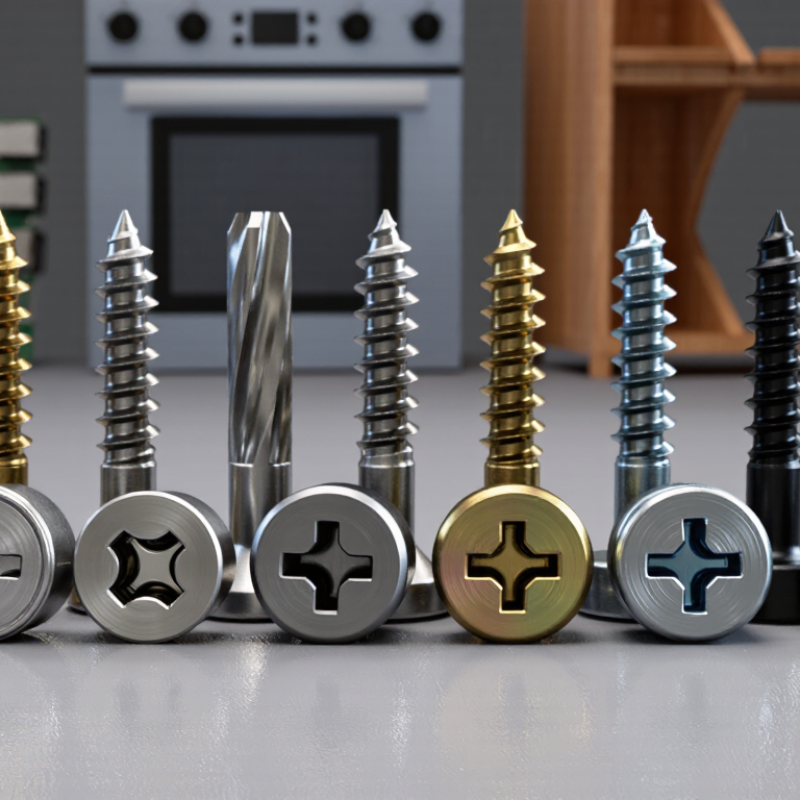
Pan head screws are defined by a broad, slightly domed head. This shape distributes clamping pressure over a wider surface. It also leaves a neat, visible finish on thin panels. The geometry works well where a flat head might weaken the material. However, the head can catch on moving parts. Clearance must be checked before ordering.
ISO 7045 covers pan head tapping screws with cross recesses, including common H and Z drive forms. Cross drives are familiar and economical, but they can cam out under excessive torque. Slotted drives suit simple assembly and manual repair. Hexalobular and hex socket drives usually provide better torque transfer. They need matching bits. Small details matter.
For global buyers, application decides the best combination. Electronics often need compact heads and controlled torque. Sheet-metal enclosures may require corrosion-resistant coatings and stable thread engagement. Furniture hardware can prioritize appearance and repeated installation. According to the World Steel Association’s 2024 statistics, global crude steel production reached about 1.89 billion tonnes in 2023. That scale supports broad steel availability, but it does not guarantee equal quality. Material grade, hardness, coating thickness, and dimensional tolerances still require inspection. One assumption deserves reconsideration: a stronger drive is not always better. Soft substrates may strip before the screw fails. A trial assembly with measured torque remains more reliable than a catalog image.
Top 10 Pan Head Screw Types by Drive, Material, and Thread
Top 10 Screw Pan Head Types for Global Buyers
Pan head screws differ mainly by drive, material, and thread design. In sourcing work, these details affect installation, corrosion resistance, and holding strength.
A Phillips-drive carbon steel screw with a coarse thread suits general assembly.
A slotted stainless steel screw with a fine machine thread works well in corrosion-prone equipment.
A Pozidriv zinc-plated steel screw offers improved bit engagement for furniture and light machinery.
A Torx-drive alloy steel screw handles higher installation torque.
A hex socket stainless steel screw provides a clean appearance and reliable clamping.
A square-drive steel screw is useful where repeated installation may cause bit slipping.
A combination-drive screw accepts two tool styles, but its head can be less efficient under heavy torque.
A brass pan head screw with a machine thread fits decorative or low-load electrical assemblies.
A nylon screw with a coarse thread avoids metal contact and reduces scratching.
A stainless self-tapping screw forms threads in thin sheet metal.
Thread selection deserves careful checking. Coarse threads usually install faster and tolerate softer materials. Fine threads can provide precise adjustment and better clamping in hard materials. Self-tapping threads save preparation time, yet they may split thin plastic or distort soft sheet metal.
Material certificates, salt-spray data, and dimensional inspection should support supplier claims. Confirm the drive recess, head diameter, thread pitch, and applicable standard before ordering. A polished sample can still hide poor thread accuracy. I have seen attractive screws fail during installation because the bit fit was slightly wrong. That detail is easy to miss.
How ISO Metric Sizes and Property Classes Guide Screw Selection
Top 10 Screw Pan Head Types for Global Buyers
Choosing a pan head screw starts with more than drive style. ISO metric sizing defines fit, while property class indicates mechanical strength. A marking such as M6 × 1.0 × 20 means a 6 mm diameter, 1.0 mm pitch, and 20 mm length. Measure length from beneath the pan head. Small errors matter. A 2 mm mismatch can affect thread engagement or clearance.
Common pan head options include Phillips, slotted, Pozidriv, hexalobular, hex socket, combination drive, serrated, captive, self-tapping, and machine-thread designs. Select the drive for the available tool and assembly environment. For repeated production work, hexalobular drives usually resist cam-out better than basic slotted drives. Yet tool access, not theory, often decides the result. Test the actual driver.
Property classes guide load decisions. Class 4.6 suits lighter general fastening, while 8.8 offers higher strength for many structural machine joints. Classes 10.9 and 12.9 need controlled tightening and compatible mating materials. Never replace a specified class with a stronger screw without checking thread stripping and joint design. Stainless metric fasteners may use different marking systems, such as 50, 70, or 80. Do not compare those numbers directly with carbon-steel classes. I have seen purchasing sheets mix these systems. That mistake deserves review before ordering. Check ISO dimensions, pitch gauges, markings, coating, and torque data against the application.
Top 10 Screw Pan Head Types for Global Buyers
ISO metric dimensions and property classes help buyers match pan head screws with the required strength, load, and application conditions.
The chart compares ISO metric screw property classes by nominal tensile strength and minimum proof stress according to ISO 898-1. Higher property classes provide greater mechanical strength, while the pan head type and drive style should be selected according to installation access, appearance, and assembly requirements.
Global Buyer Checks: Standards, Coatings, Corrosion Resistance, and Fitment
Top 10 Screw Pan Head Types for Global Buyers
Global Buyer Checks: Standards, Coatings, Corrosion Resistance, and Fitment
When global buyers compare the top 10 screw pan head types, fitment should lead the inspection. A clean head profile means little if the thread, drive, or length fails the assembly. Check the drawing, thread standard, nominal diameter, pitch, and tolerance before approving samples. Metric and inch systems can look deceptively similar. They are not interchangeable. Use gauges, calipers, and a controlled sample build to confirm engagement depth.
Coating selection depends on humidity, salt exposure, temperature, and contact with dissimilar metals. Zinc-based finishes suit many indoor applications, while stainless steel or engineered protective coatings may serve harsher environments. That choice needs test evidence, not color. Ask for coating thickness, adhesion data, corrosion test results, and lot traceability. Test hours are useful, but they do not recreate every field condition. I have seen attractive finishes fail around the drive recess first. Inspect edges, threads, and the underside of the head.
Fitment also depends on head diameter, head height, under-head bearing, and tool access. A pan head that seats well on one panel may interfere with a countersunk hole or washer. Review torque requirements and verify stripping resistance with production tools. Do not rely on a supplier photograph. Measure incoming samples. Record deviations, even minor ones, because small geometry changes can affect automated feeding and installation. My own checks are not perfect; assembly trials sometimes expose assumptions that drawings miss.