In today’s competitive market, choosing the right dual valve solution is crucial for optimal performance. These systems play a vital role in controlling fluid dynamics across various industries. A well-designed dual valve offers improved efficiency, enhanced safety, and reduced operational costs.
However, not all dual valves are created equal. Different applications demand specific features. It's important to recognize that some solutions may seem ideal but might not function effectively in every scenario. Assessing your unique needs is essential for making an informed decision. A little research can reveal significant differences in performance.
Consider potential drawbacks. Some dual valve systems may require regular maintenance to ensure longevity. Understanding these challenges can lead to better choices. Selecting the right dual valve involves evaluating trade-offs and identifying what works best for your situation. Ultimately, the right solution can drive success and efficiency in operations.

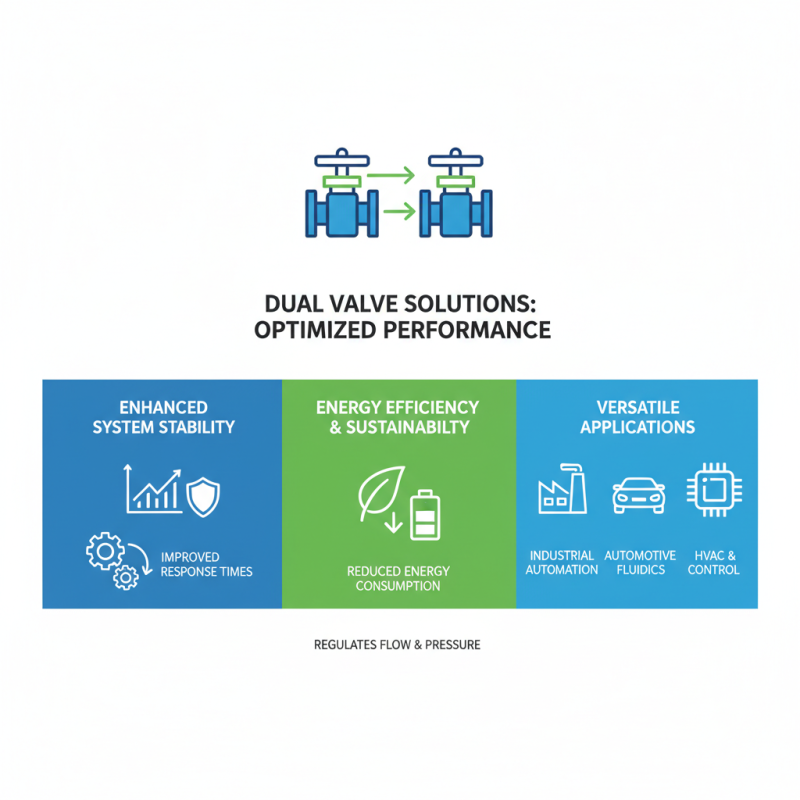
Dual valve solutions play a crucial role in performance optimization across various applications. They offer an efficient means of regulating flow and pressure. This regulation enhances system stability and improves response times, which is vital in many industries. Properly designed dual valve systems can significantly reduce energy consumption, ensuring greater sustainability.
The advantages of dual valve solutions extend beyond mere efficiency. They provide better control over variable conditions. In processes where precise adjustments are critical, dual valves enable quick modifications. Such responsiveness adds value to operations but requires careful monitoring. Sometimes, the implementation can be complex, leading to challenges that need addressing. Adapting to these systems may require additional training, adding to initial costs.
Investing in dual valve solutions opens doors to improved reliability and performance. However, not all setups will yield immediate benefits. There might be teething issues that need reflection. As businesses strive for optimization, a balance between complexity and performance must be found. This journey toward better solutions is a continuous process, where learning from setbacks is essential.
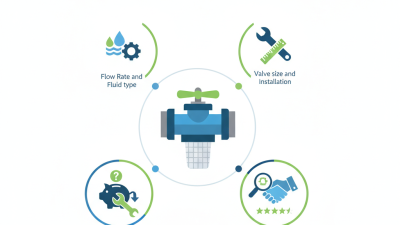
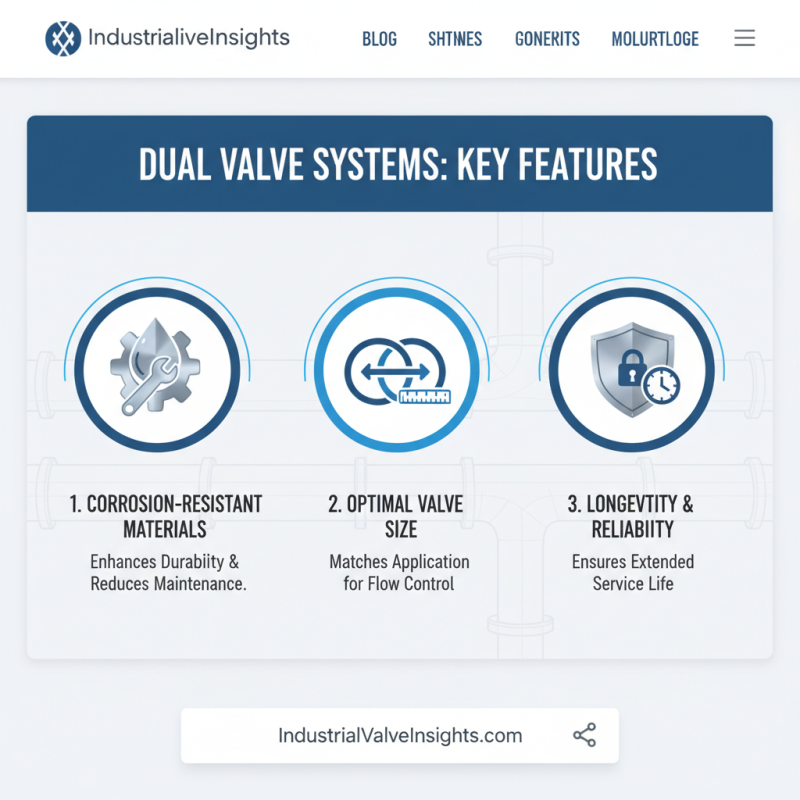
When considering dual valve systems, certain key features are essential. The materials used in the construction often determine durability. Look for valves made from corrosion-resistant materials. This improves longevity and minimizes maintenance issues. Also, pay attention to the valve size. It should match your specific application needs to ensure optimal flow control.
Another important aspect is the ease of installation. Complicated setups can lead to errors and inefficiencies. A straightforward design often means quicker installation and less downtime. Don't overlook the automation capability of the system as well. Automated features can enhance performance but might require additional training.
Performance metrics should also be scrutinized. High-performing valves may have higher upfront costs. However, they may save money in the long run by reducing energy consumption. Balancing initial investments with long-term benefits can be challenging. Finally, consider the specific application. Not all dual valve solutions may fit your requirements perfectly. Be prepared to reflect on your choices and adjust as necessary.
In industrial applications, dual valve solutions play a critical role. They enhance efficiency and reliability across various sectors. According to the International Society of Automation, these valves can boost system performance by 25 to 40%. This improvement leads to reduced operational costs and increased production output.
One notable aspect of dual valve systems is their ability to provide redundancy. In sectors like oil and gas, failure is not an option. Solutions that incorporate dual valves often ensure that if one valve fails, the other continues to operate. However, not all dual valve designs achieve this reliability. Industry surveys show that 30% of users complain about inconsistent performance, highlighting the need for careful selection and testing.
Maintenance remains a challenge, too. Regular inspections are essential, yet many facilities lack the resources. Inadequate maintenance can lead to malfunction, which ultimately impacts production. Research by industry experts indicates that 20% of downtime in manufacturing can be traced back to valve failures. As the demand for efficiency grows, the approach to dual valve solutions must evolve. Ensuring optimal performance requires attention to detail and a commitment to ongoing improvement.
Dual valve technologies have become essential in various industries, enhancing performance and efficiency. A 2022 report indicated that the global market for dual valve solutions is expected to grow by 6% annually. This increasing demand underscores the need to understand the different technologies available.
One prominent technology is the pneumatic dual valve. Its rapid response time can improve system reliability. However, it lacks precision at low flow rates. On the other hand, electric dual valves offer greater accuracy but may require more maintenance. A 2023 study found that facilities using electronic controls reported a 20% increase in energy efficiency. Yet, the initial investment and complexity can be barriers for small industries.
Investing in dual valve systems brings complexities. A recent analysis highlighted that companies must balance cost against performance needs. Many companies see performance gains up to 30% with the right system. However, improper installation and calibration can negate these benefits. It’s essential to assess both short-term and long-term impacts. Companies should reflect on their specific requirements and challenges before committing to a technology.
| Valve Technology | Pressure Rating (psi) | Flow Coefficient (Cv) | Material | Temperature Range (°F) | Applications |
|---|---|---|---|---|---|
| High Performance Dual Valve | 3000 | 50 | Stainless Steel | -40 to 400 | Oil & Gas, Water Treatment |
| Smart Dual Valve | 2000 | 40 | PVC | -20 to 150 | Chemical Processing, HVAC |
| Compact Dual Valve | 1500 | 30 | Aluminum | -10 to 220 | Food & Beverage, Pharmaceutical |
| Heavy Duty Dual Valve | 4000 | 70 | Carbon Steel | 0 to 350 | Mining, Industrial Processes |
| Eco Dual Valve | 1000 | 20 | Recycled Materials | -30 to 180 | Environmental Applications, Water Conservation |
Dual valve solutions have gained traction in various industries, especially in fluid control and automation. These systems enhance efficiency by enabling precise flow management. Future trends highlight significant advancements focusing on digital integration and smart technologies. According to recent industry reports, companies adopting smart dual valves can see a performance boost of up to 30%.
One key area is the integration of sensors and IoT technology. With real-time monitoring, users can swiftly detect anomalies. This proactive approach helps prevent costly downtimes. The anticipated shift towards predictive maintenance will further enhance operational effectiveness. However, not all users implement these technologies. Some remain reliant on traditional systems, missing out on potential gains.
Tips: Regular training for staff with new technologies is essential. Evaluate maintenance schedules to ensure optimal performance. Analyzing data from dual valves can reveal patterns that may be overlooked, driving further improvements. It's vital to stay current with industry changes to remain competitive. Engaging with updated practices is crucial, yet many still resist adaptation, risking stagnation.
This bar chart illustrates the performance efficiency of the top 5 dual valve solutions based on various metrics such as pressure loss, flow rate, response time, and durability ratings. These metrics indicate the effectiveness and reliability of each solution in operational environments.
© Shipham Valves 2025. All Rights Reserved.
Website By PS Website Design Ltd
Request a Quote/Further Information
Download
We use cookies on this website, by continuing to browse the site you are agreeing to our use of cookies. Find out more.