Choosing reliable Marine Batteries is not a simple matter of comparing prices or advertised amp-hours. Global buyers need evidence from real operating conditions, including fishing boats, yachts, ferries, and electric workboats. A battery that performs well in a warm showroom may struggle in northern waters, tight engine rooms, or vessels with irregular charging cycles.
Marine electrical author Nigel Calder has written, “The battery is the heart of a boat’s electrical system.” That view remains practical today. Battery chemistry, usable capacity, thermal control, charging compatibility, and battery-management systems can directly affect safety and uptime. Warranty terms matter too. So does the supplier’s ability to provide technical support after shipment.
This guide examines China’s top 10 Marine Batteries suppliers for international buyers. It considers manufacturing experience, product range, testing practices, certifications, customization, export capability, and after-sales service. The list does not treat factory scale as automatic proof of quality. That would be an easy mistake.
Instead, buyers should compare documented performance with their vessel’s actual energy profile. A 12-volt lithium battery for a leisure boat has different demands from a high-voltage propulsion pack. Installation space, salt exposure, vibration, and charging temperatures also deserve attention. Some supplier claims may appear impressive, yet independent verification can be limited. Buyers should ask better questions.
The strongest suppliers combine engineering knowledge with consistent production control. They also communicate clearly when a product is unsuitable. That honesty is valuable. Sometimes, the cheapest option becomes the most expensive lesson.
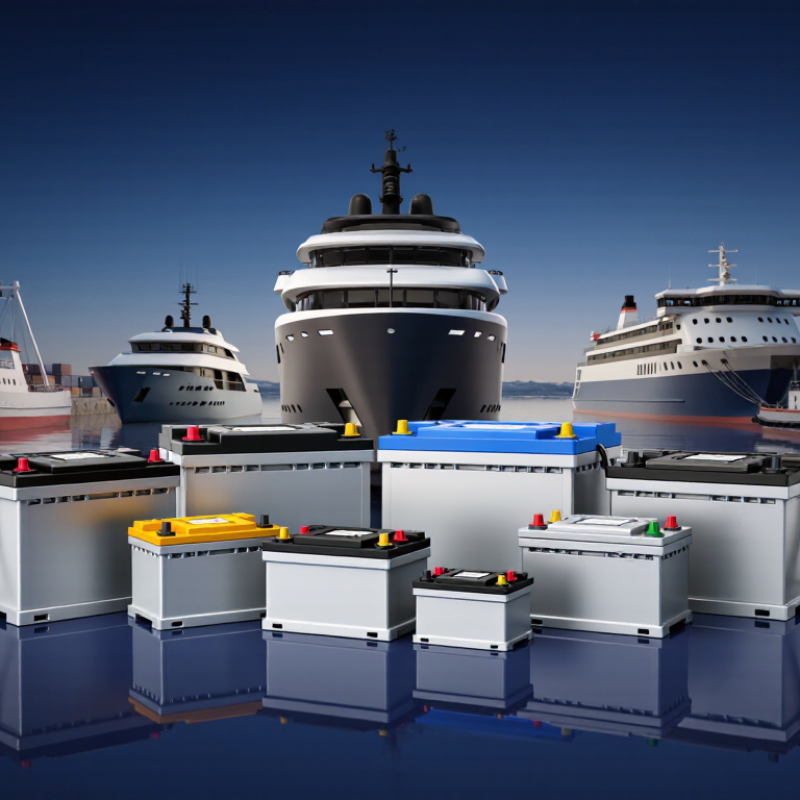
A marine battery supplier in China is more than a factory with a catalog. It should understand vibration, saltwater exposure, humidity, and limited engine-room space. Experienced suppliers discuss vessel type, daily load, charging sources, and installation conditions before quoting. That conversation often reveals whether the supplier designs solutions or simply resells standard batteries.
Professional capability appears in the details. A reliable supplier should explain cell chemistry, battery management settings, enclosure protection, thermal behavior, and expected cycle life. It should provide clear test records, traceable production data, and current compliance documents for the destination market. Sample batteries should undergo capacity, vibration, temperature, insulation, and water-resistance checks. Ask for photos of production stages. Small details matter.
Supply consistency also defines the relationship. The supplier needs stable cell sourcing, documented inspection procedures, trained technicians, and careful final testing. It should offer wiring diagrams, installation guidance, replacement parts, and responsive technical support across time zones. Communication must remain precise when specifications change. No factory gets every detail right. I would still question any supplier promising unlimited service life or identical performance in every climate. A strong partner admits testing limits, records defects, and improves its process after field feedback. That honesty is sometimes more valuable than a low quotation.

Choosing among China’s top marine battery suppliers requires more than comparing price, capacity, or factory photographs. UNCTAD’s Review of Maritime Transport 2023 states that over 80% of global merchandise trade moves by sea. Reliability therefore matters more than a low quotation. Ask for verified cycle-life data, thermal-runaway test results, salt-spray evidence, and battery-management-system records. The supplier should also explain cell origin, production traceability, software updates, and warranty exclusions in clear English.
Industry data adds useful context. The International Energy Agency reported that global lithium-ion battery demand reached about 750 GWh in 2023. This scale improves manufacturing experience, but it does not guarantee marine quality. DNV’s Maritime Forecast to 2050 identifies batteries as especially suitable for short-sea shipping, ferries, and hybrid propulsion. Check whether the proposed pack matches your vessel’s route, hotel load, charging time, ventilation, and emergency procedures. IEC 62619 testing and independent classification review are valuable evidence, not decorative certificates. A supplier can still pass paperwork and fail during rough, salty operations. That possibility deserves attention.
Tips: Request a complete technical dossier before sampling. Compare usable energy, not only nominal kWh. Inspect factory quality controls through an independent auditor. Ask for a witnessed factory acceptance test, including alarm simulation and shutdown testing. Confirm local service response times and spare-module availability. A small pilot installation may reveal communication faults that brochures hide. Do not ignore imperfect data; unexplained gaps often require deeper questions.
China’s top 10 marine battery suppliers serve fishing boats, leisure vessels, ferries, and workboats worldwide. Their product ranges usually include lithium iron phosphate, lead-acid, and deep-cycle battery systems. Buyers should examine capacity, voltage stability, cycle life, charging speed, and low-temperature performance. A battery that performs well in a factory test may behave differently offshore.
Experienced buyers request complete technical documents before placing an order. These should include safety test reports, cell specifications, protection settings, warranty terms, and installation guidance. Suppliers with reliable engineering teams can design battery packs for confined engine rooms and irregular charging conditions. Marine vibration, salt air, humidity, and heat deserve practical testing. Ask for enclosure ratings and corrosion-resistant materials.
A perfect ranking does not exist. Vessel type changes the best choice. A small electric boat may need a compact 48-volt pack, while a commercial vessel may require several connected modules. Check production records, inspection procedures, spare-part access, and response times. Independent testing can reveal weaknesses that sales documents hide. That step costs time.
Global buyers should also confirm compliant shipping documents and regional electrical requirements. Clear communication matters when translating load profiles into battery size. Some suppliers offer excellent cells but weaker after-sales support. Others communicate well but provide limited customization. Comparing the entire service process, not only the price, creates a more dependable purchasing decision.
Marine battery selection starts with the vessel’s duty cycle, not a product label. Lithium iron phosphate batteries can offer high usable capacity, steady voltage, and shorter charging times. They may suit electric propulsion or frequent hotel loads. Lead-acid batteries remain familiar and can be practical for modest auxiliary demand, but usable capacity and weight need careful consideration. Different chemistries behave differently in cold conditions. Check the manufacturer’s operating limits.
Details matter. A battery supplying navigation equipment overnight faces a different load profile from one starting an engine. Estimate daily energy use in watt-hours, then allow for reserve capacity and conversion losses. Confirm continuous and peak current ratings against the inverter, motor, or winch. Inspect the charging system too: alternators, shore chargers, and solar controllers must match the battery’s permitted charging profile. Compatibility is not automatic.
Marine environments are harsh. Salt spray, vibration, moisture, and confined compartments can expose weak installation choices. Review enclosure protection, terminal covers, mounting instructions, and battery management features. For lithium systems, verify that protection settings address over-temperature, over-current, and low-voltage conditions. Ask for test reports, warranty terms, and clear guidance on maintenance. A specification sheet helps, but it cannot answer every question. I would also compare the supplier’s technical support before purchase; this step is easy to overlook. If actual loads are uncertain, measure them aboard before sizing the bank. That extra work may feel tedious. It can prevent an expensive mismatch.
Technology and product-selection reference — not a supplier ranking. Voltage and capacity examples are representative configurations; actual specifications vary by product.
| No. | Marine battery category | Chemistry | Typical nominal system voltage | Common marine use | Key selection checks |
|---|---|---|---|---|---|
| 1 | Flooded starting battery | Flooded lead-acid | 12 V | Engine cranking and short, high-current starts | Check the engine maker’s required cranking current, battery dimensions, terminal layout, ventilation, and maintenance access. |
| 2 | AGM starting battery | Absorbent glass mat (VRLA lead-acid) | 12 V | Engine starting where a sealed, spill-resistant design is preferred | Compare cranking ratings and confirm the alternator and charger have an AGM-compatible charging profile. |
| 3 | AGM deep-cycle battery | Absorbent glass mat (VRLA lead-acid) | 12 V or 24 V banks | House loads, electronics, lighting, and auxiliary equipment | Review rated capacity and discharge conditions, plus recharge time, charging compatibility, and expected cycle life. |
| 4 | Gel deep-cycle battery | Gelled-electrolyte VRLA lead-acid | 12 V or 24 V banks | House or auxiliary loads in installations suited to gel charging | Use the specified gel charging limits; excessive charging voltage can damage the battery. Check capacity and installation requirements. |
| 5 | Lead-carbon deep-cycle battery | Lead-acid with carbon-enhanced negative electrode | 12 V or 24 V banks | Auxiliary energy storage with frequent cycling or partial-state-of-charge operation | Compare cycle-life test conditions, charging requirements, weight, capacity, and system-level cost. |
| 6 | 12 V LiFePO₄ house battery | Lithium iron phosphate (LFP) | 12.8 V nominal | House loads, trolling motors where compatible, and onboard energy storage | Check the battery management system (BMS), continuous and peak current limits, low-temperature charging protection, and charger compatibility. |
| 7 | 24 V LiFePO₄ bank | Lithium iron phosphate (LFP) | 25.6 V nominal | Higher-voltage propulsion or house systems designed for 24 V | Verify inverter, motor, charger, BMS, and protection-device voltage and current ratings; confirm series connection is permitted. |
| 8 | 48 V LiFePO₄ bank | Lithium iron phosphate (LFP) | Commonly 48 V or 51.2 V nominal, depending on design | Large house systems, electric propulsion, or hybrid marine systems | Check equipment voltage windows, BMS communications, fault protection, installation standards, and qualified system integration. |
| 9 | Lithium starting battery | Typically lithium iron phosphate (LFP) | 12.8 V nominal | Engine cranking only when specifically rated for starting use | Confirm cranking-current rating, BMS response to starter loads, alternator compatibility, and the engine maker’s requirements. |
| 10 | Nickel-cadmium battery system | Nickel-cadmium (Ni-Cd) | Configured from 1.2 V nominal cells to the required system voltage | Specialized marine, industrial, or emergency-duty applications | Assess applicable environmental rules, maintenance needs, charger settings, system approval requirements, and end-of-life recycling. |
For global buyers comparing China’s marine battery suppliers, certification should be checked against the vessel’s actual operating profile. A coastal workboat and an ocean-going vessel do not face identical demands. Request the cell and battery-system test reports, installation drawings, protection settings, and traceable serial numbers. Then confirm that the documents cover the exact model being quoted, not a similar product. Small mismatch. Big consequence.
IEC 62619 provides safety requirements for industrial lithium batteries, but a test report alone does not equal approval for every vessel or market. Buyers should ask the flag administration, classification society, and local authority which approvals apply. DNV’s Maritime Forecast to 2050 highlights shipping’s transition toward lower-emission energy systems; that shift makes lifecycle data and service support increasingly important. For each supplier, verify factory audit records, production controls, warranty terms, spare-part availability, and references from comparable marine installations. Ask for evidence, not just a presentation. The International Energy Agency reported that global battery demand rose by about 40% in 2023, reaching roughly 750 GWh (Batteries and Secure Energy Transitions, 2024). This broad market figure is not marine-specific, but it underscores why buyers should examine supply-chain traceability and capacity claims carefully. A neat certificate folder is reassuring. It is not the whole picture.
© Shipham Valves 2025. All Rights Reserved.
Website By PS Website Design Ltd
Request a Quote/Further Information
Download
We use cookies on this website, by continuing to browse the site you are agreeing to our use of cookies. Find out more.