China Top 10 Furniture Grade Plywood Suppliers?
Choosing among China’s top Furniture Grade Plywood suppliers requires more than comparing prices or polished catalogs. A reliable supplier must prove material consistency, production control, and long-term service. Small details matter. Check the veneer surface under angled light. Inspect the core for gaps, overlaps, and uneven glue lines. Ask for recent test reports, not old marketing files.
Bruce Hoadley, a respected wood technologist, stated, “Wood moves, and furniture must accommodate that movement.” This principle remains essential when evaluating plywood for cabinets, tables, wardrobes, and custom interiors. A beautiful panel can still fail if its core reacts poorly to humidity. That mistake becomes visible through swollen edges, open joints, or bubbling laminate.
This guide examines ten leading Chinese suppliers of Furniture Grade Plywood through practical purchasing criteria. These include veneer quality, core structure, bonding performance, formaldehyde emissions, certifications, factory capacity, customization, packaging, and export experience. Supplier reputation matters, but evidence matters more. Can the factory provide stable batch records? Are thickness tolerances checked regularly? Does its packaging protect corners during a long sea journey?
Some rankings may remain debatable. Market information changes, and supplier strengths vary by project. One factory may excel at birch plywood, while another performs better with poplar core panels or decorative hardwood faces. That distinction deserves attention. Buyers should request samples, compare full specifications, and test panels under real workshop conditions before placing large orders. A confident decision still needs room for doubt.
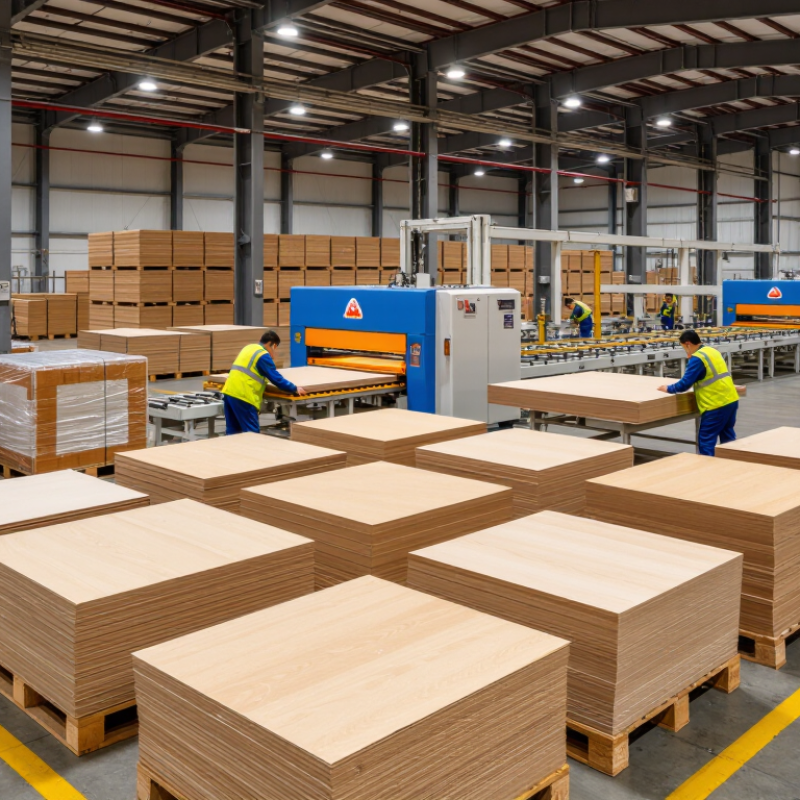
What Is Furniture-Grade Plywood and Why Does China Supply It?
Furniture-grade plywood is made for visible surfaces, stable machining, and dependable assembly. It usually has cleaner face veneers, fewer open defects, tighter core construction, and controlled formaldehyde emissions. However, “furniture-grade” is not a universal international grade. That is where buyers can become careless.
A smooth panel can hide core gaps. A bright surface can still warp. Professional buyers should request veneer species, thickness tolerance, moisture content, bonding class, and emission test results. EN 314 bonding classifications and EN 636 performance standards provide useful reference points. For indoor furniture, E1-level emission documentation is also commonly requested in international trade. Yet paperwork alone is not enough. Trial cutting and edge inspection remain practical checks.
China supplies large volumes because its panel industry combines abundant processing capacity, established wood-processing clusters, and flexible production for different specifications. FAOSTAT’s Forestry Production and Trade database identifies China as the leading plywood producer, contributing more than half of global output in recent years. ITTO’s Biennial Review and Assessment also shows China’s major role in the global wood-panel market. Domestic access to poplar, eucalyptus, birch, and imported veneers supports varied furniture designs. Large factories can adjust thickness, surface quality, core structure, and packaging for export orders. Still, low price should not define quality. In my experience, inconsistent grading between suppliers remains a real risk. Independent testing is worth the extra time.
How to Evaluate China’s Top Furniture-Grade Plywood Suppliers
Choosing among China’s furniture-grade plywood suppliers requires more than comparing prices.
Start by checking factory experience, production capacity, and quality-control procedures. A reliable supplier should explain its veneer sources, core construction, adhesive type, and pressing temperature clearly. Vague answers deserve caution.
Request full-size samples, not only polished display pieces. Inspect the surface under angled light for patches, bubbles, sanding marks, and uneven color. Check thickness with a caliper at several points. Small differences can affect cabinet doors and CNC cutting.
Ask for moisture readings from recently produced panels. Test formaldehyde emissions through recognized laboratories, and verify that reports match the exact product specification.
Factory visits can reveal important details.
Look at veneer storage, panel stacking, edge trimming, and warehouse humidity. Clean, organized areas do not prove everything. However, poor storage often causes warping or delamination later.
Ask how workers record defects and how rejected panels are handled. Traceable batch numbers improve accountability.
Communication also matters. A dependable supplier confirms tolerances, packaging materials, loading methods, and delivery terms in writing. Compare the quotation with the sample quality.
The cheapest offer may hide thinner veneers or weaker cores. I have seen attractive samples fail after humid transport, so packaging deserves careful testing.
No evaluation is perfect. Recheck critical data before placing a large order. Percentage claims without test conditions should never guide the final decision.
Profiles of Ten Leading Chinese Furniture-Grade Plywood Suppliers
China Top 10 Furniture Grade Plywood Suppliers
The ten leading Chinese furniture-grade plywood suppliers serve different production needs. Several focus on birch-faced panels for cabinets and wardrobes. Others produce poplar-core, hardwood-core, or mixed-core boards for interior furniture. Their profiles should be judged by more than export volume. Manufacturing experience, veneer quality, bonding consistency, and factory inspection records matter greatly.
Some suppliers offer custom thicknesses, calibrated sanding, low-emission adhesives, and moisture-resistant construction. Others compete through flexible minimum orders and faster sampling. A reliable supplier should explain its core composition clearly. It should also provide recent laboratory reports, product specifications, and traceable batch information. Experienced buyers often inspect the panel edges, surface flatness, and screw-holding performance. These small checks reveal problems that photographs can hide.
Tips: Request samples from several suppliers. Measure thickness in multiple areas. Check for bubbling, open joints, and uneven sanding. Confirm applicable emission and safety requirements before ordering. A polished catalog is not proof of stable production. I would verify every important claim through documents and factory communication. Even experienced buyers can overlook moisture changes during shipping. That weakness deserves attention. A careful comparison creates a more dependable purchasing decision.
Comparing Product Quality, Certifications, Prices, and Export Services
China’s top furniture-grade plywood suppliers should be compared through measurable evidence, not catalog photos. The FAO and UNECE Forest Products Annual Market Review 2023–2024 highlights continuing demand for wood-based panels in construction and furniture. Buyers should check veneer thickness, core species, moisture content, sanding quality, and panel flatness. A 1.2-millimeter face veneer feels very different from a thin decorative layer after machining.
Certifications reveal production discipline. For furniture interiors, EN 314-2 bonding classes help assess glue performance, while EN 13986 supports panel use in construction applications. For North American projects, TSCA Title VI or CARB Phase 2 documentation matters because formaldehyde emissions are regulated. FSC chain-of-custody certification can also verify controlled material sourcing. Verify certificate numbers directly. Paperwork can look convincing.
Price needs a wider calculation. Compare the same thickness, grade, core structure, tolerance, packaging, and loading quantity. A low factory quote may exclude inspection, fumigation, inland transport, or replacement risk. UNCTAD’s Review of Maritime Transport reports that ships carry over 80% of global merchandise trade by volume, making freight volatility important for landed cost. Export service should include moisture-proof packing, clear markings, sample approval, pre-shipment inspection, and responsive claims handling. I would still test several batches. One successful sample proves little.
China Top 10 Furniture-Grade Plywood Suppliers: Market Benchmark
Indicative export-price comparison for commonly specified furniture-grade plywood constructions in China. The figures are market benchmarks rather than company-specific quotations or a supplier ranking.
How to read the chart: Higher prices generally reflect denser hardwood cores, improved face quality, stricter emission requirements, or FSC chain-of-custody documentation. Actual export prices vary by thickness, grade combination, order volume, packaging, port, Incoterms, and test requirements.