What is Regulated Power Supply and How Does it Work?
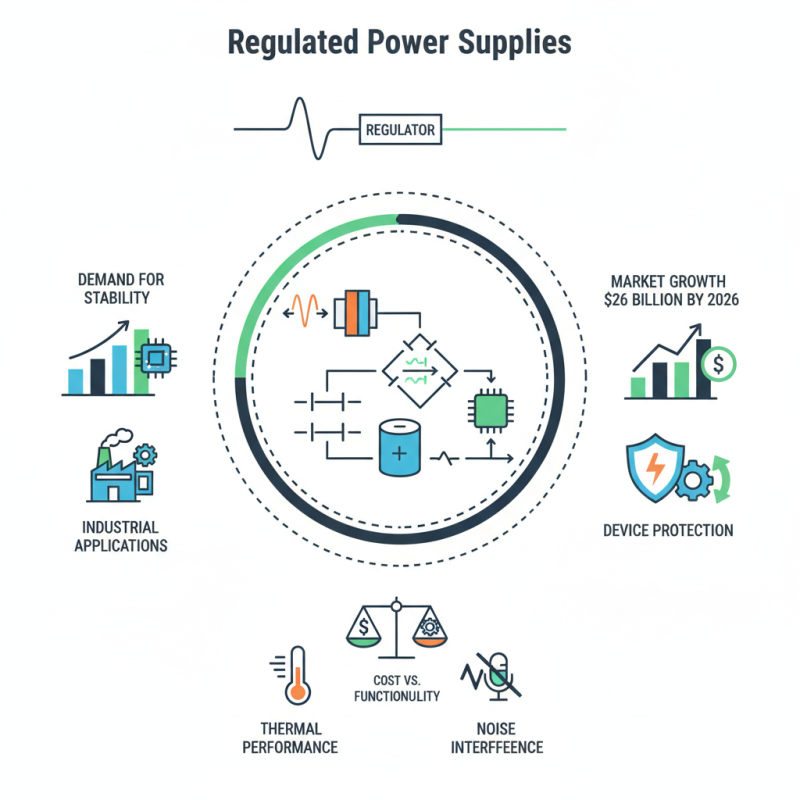
In today's electronics landscape, the demand for stable power sources has surged. A Regulated Power Supply (RPS) plays a crucial role in various applications. Industries rely on RPS to deliver consistent voltage and current. Reports indicate a growing market, projected to reach $26 billion by 2026. This surge underscores the need for reliable power sources in sensitive electronic devices.
The RPS ensures efficiency and accuracy, minimizing the risk of device failure. However, the complexity of these systems can present challenges. Noise interference and thermal performance are critical factors. The balance between cost and functionality is often a point of contention. Many users find it challenging to select the right RPS due to varied specifications.
Understanding the operation of a Regulated Power Supply is vital for engineers and designers. These systems are not simply plug-and-play; they require careful consideration of load requirements and environmental factors. Making informed choices can lead to improved reliability and performance. Yet, many still overlook key details, leading to inefficiencies.
What is a Regulated Power Supply?
A regulated power supply is a device that provides a stable output voltage. It ensures that devices receive the right amount of power. This is crucial for electronic components that require specific voltage levels to function properly.
The main components include a transformer, rectifier, and voltage regulator. The transformer reduces the input voltage. Next, the rectifier converts AC to DC. Finally, the voltage regulator maintains a consistent output voltage. Even small fluctuations in supply voltage can cause issues. For instance, sensitive equipment might malfunction or suffer damage.
People often overlook the importance of precision in regulated power supplies. They might think any power source is sufficient. However, a slight overvoltage can be detrimental. Reflections on this could lead to better choices in design and usage. Understanding the intricacies of regulated power supplies can significantly enhance performance and reliability.
Key Components of a Regulated Power Supply
A regulated power supply is vital for ensuring consistent voltage output. It keeps devices functioning reliably. Understanding its key components helps explain its efficiency.
At the heart of a regulated power supply is the transformer. This component adjusts the voltage to the desired level. Next is the rectifier, which converts AC to DC. This process is essential, yet sometimes the rectification can seem messy. Following the rectification, filtering smooths out voltage fluctuations. Capacitors play a crucial role here, but their lifespan can be a concern.
Finally, the voltage regulator ensures that the output remains steady. It reacts to changes in load and input voltage. This component is impressive but may face challenges in extreme conditions. Implementing thermal protection can mitigate risks, but it adds complexity. Each part must work together seamlessly. When one fails, the entire system can falter.
Output Voltage Regulation of Power Supply
This bar chart illustrates the output voltage levels of a regulated power supply under varying load conditions. It shows that while the nominal output voltage is maintained, some variation occurs due to the regulation process.
How Regulated Power Supplies Maintain Voltage Stability
A regulated power supply is essential for maintaining consistent performance in electronic devices. It ensures that voltage remains stable, regardless of fluctuations in input voltage or load conditions. These supplies use various feedback mechanisms to detect changes and adjust the output. For example, as reported in the "2022 Power Supply Market Report," over 30% of failures in electronics arise from voltage instability.
Voltage regulation is crucial, especially in sensitive applications like medical devices and communications. Small deviations can lead to significant errors. Studies show that maintaining a stable output voltage within ±5% can greatly enhance device reliability and lifespan. In fact, devices with stable power supplies can operate up to 50% longer than those without proper regulation.
Yet, there are still challenges. Not all regulated power supplies achieve the desired stability under all conditions. Some might fail to respond adequately to rapid load changes. This can result in momentary voltage drops or spikes. Engineers must consider these imperfections when designing circuits. Even with advancements, reflection on these flaws is necessary for future progress in power supply technology.
Types of Regulated Power Supplies and Their Applications
Regulated power supplies are essential in many applications. They provide a stable voltage output, which is crucial for electronic devices. Different types of regulated power supplies serve various purposes.
Linear power supplies are simple and reliable. They use a series of components to maintain the desired voltage. However, they can be inefficient, especially under heavy loads. Switching power supplies, on the other hand, are more efficient. They convert input power using high-frequency switching. This process reduces energy loss but adds complexity in design.
Applications vary widely. Linear supplies are common in audio equipment. They offer low noise for clear sound. Switching supplies are found in computers and mobile devices. Their efficiency makes them ideal for compact designs. However, poor shielding can lead to electromagnetic interference. Each type has its advantages and drawbacks, making the choice context-dependent.
Common Issues and Troubleshooting for Regulated Power Supplies
Regulated power supplies play a crucial role in electronic devices, ensuring a stable output voltage. However, they are not immune to issues. Common problems can arise due to overheating, component failure, or incorrect input voltage.
Overheating is a frequent issue in regulated power supplies. It can lead to performance degradation or even permanent damage. According to industry reports, nearly 30% of power supply failures are related to heat. Ensure a proper cooling system is in place. Regular maintenance helps to mitigate risks. Clean dust from vents and avoid placing the supply in hot areas.
Another common issue involves output noise. Fluctuations can disrupt sensitive devices, particularly in audio and communication systems. This can be due to poor filter design or insufficient grounding. An inspector’s checklist can help identify these problems. Monitor the noise levels regularly.
Tips: Use high-quality capacitors for better filtering. Review the design for potential grounding issues. Keeping components cool will enhance longevity.
Remember, troubleshooting requires patience. Take time to assess the symptoms correctly. This practice will lead to more effective resolutions.
What is Regulated Power Supply and How Does it Work? - Common Issues and Troubleshooting for Regulated Power Supplies
| Parameter | Description | Common Issues | Troubleshooting Tips |
| Voltage Regulation | The ability to maintain a constant output voltage despite variations in input voltage or load conditions. | Fluctuating output voltage | Check and replace faulty voltage regulators. |
| Current Limiting | A feature that protects against excessive current flow by limiting output current to a specified level. | Power supply trip due to excessive load | Reduce load or check for short circuits. |
| Temperature Regulation | Ensures stable operation by managing temperature through heat sinks or fans. | Overheating | Clean dust from vents and ensure proper airflow. |
| Ripple Voltage | The AC voltage variation superimposed on the DC output voltage. | Excessive ripple can affect sensitive electronics | Use higher quality capacitors or filters. |
| Load Regulation | The power supply's ability to maintain voltage as the load changes. | Voltage dropping under load | Check connections and upgrade to a higher capacity supply. |