Laser Optics for 3D Printing Tips from China Import Expo

The realm of "Laser Optics for 3D Printing" is rapidly evolving. Recently, the China Import Expo showcased innovations in advanced manufacturing and technology. During this event, experts emphasized the integration of laser optics as a pivotal component of 3D printing processes. Companies are exploring how these optical technologies enhance precision and efficiency.

Attendees noted the potential gaps in understanding laser optics' role. Many suppliers had impressive displays but lacked clarity on practical applications. This inconsistency reminded us of the importance of knowledge sharing. Professionals in this field must bridge the gap between advanced technology and user comprehension.

Observing these developments raises questions about sustainability and scalability. Are we fully aware of the long-term effects on production environments? The insights gathered from the expo serve as a starting point for deeper discussions on optimizing laser optics for 3D printing. As we move forward, addressing these issues can lead to more responsible advancements in technology.
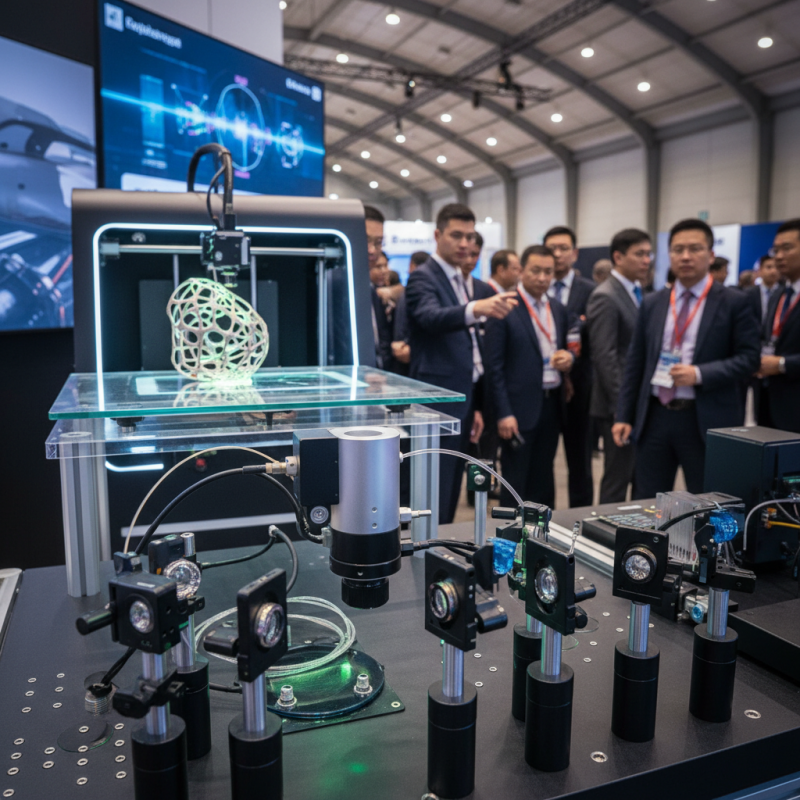
Laser Optics for 3D Printing Tips from China Import Expo

Overview of Laser Optics in 3D Printing Technology

Laser optics play a crucial role in the advancement of 3D printing technologies. These systems enable precise melting and solidification of materials. The technology ensures that printed objects maintain their integrity and desired dimensions. High-quality lasers can create intricate designs with remarkable accuracy. However, the choice of optics can greatly affect the final product.

Some users struggle with laser calibration and focus. A slight misalignment can lead to defects in the print. Everyone needs to understand the importance of regular maintenance. Ensuring that optics are clean and in good condition is vital. Operators often overlook this step, resulting in suboptimal performance.

Continuous learning from workshops and expos can shed light on these common issues. The use of laser optics is evolving rapidly. New techniques emerge that can enhance printing speeds and quality. However, there is still a long way to go. Innovators must address the challenges in material compatibility and optical efficiency. Engaging with experts at events can provide valuable insights.
Attending seminars is a great way to network and share experiences.
Key Innovations Presented at the China Import Expo

The China Import Expo has unveiled exciting innovations in laser optics for 3D printing. Attendees were captivated by advancements that promised to redefine the industry. One standout technology featured high-precision laser systems designed for intricate detailing. This can elevate the quality of printed objects significantly.

When exploring these innovations, consider some practical tips. Ensure your setup aligns with the latest laser safety protocols. Invest in compatible equipment that enhances the laser's efficiency. Not all systems can handle complex prints smoothly, so research extensively.

Another important aspect is the importance of ongoing education. The field evolves rapidly, and staying updated is crucial. Attend workshops or online courses. Mishaps might occur during experimentation, leading to wasted material. Embrace these failures as learning opportunities, and refine your techniques.

Laser Optics for 3D Printing Tips from China Import Expo - Key Innovations Presented at the China Import Expo

Innovation Type Description Applications Impact
High-Precision Laser Systems Advanced laser systems offering improved accuracy and speed for 3D printing processes. Aerospace, medical devices, automotive. Increased production efficiency and reduced waste.
Multi-Material Printing Techniques Techniques enabling the use of multiple materials in a single print job, enhancing functional properties. Consumer products, industrial components. Allows for creation of lighter and more cost-effective products.
Laser Filament Innovations New laser-sensitive filaments developed for enhanced bonding and structural integrity. Custom 3D printing, prototyping. Improved durability and performance of 3D printed items.
Integrated Laser Scanning Integration of laser scanning in 3D printers for enhanced accuracy in reproduction of complex geometries. Art, intricate parts manufacturing. Higher fidelity in printed models and designs.

Applications of Laser Optics in Various Industries

Laser optics is revolutionizing various industries, particularly in 3D printing. This technology utilizes focused light to manipulate materials at an unprecedented level. In aerospace, for instance, laser optics facilitates the creation of complex components with reduced weight. These parts are crucial for improving fuel efficiency and durability.

In the medical field, precision is vital. Laser optics enables customized implants and surgical tools. This customization leads to better patient outcomes. However, not every application has been flawless. There can be miscalculations during the printing process, leading to structural weaknesses. The need for continuous improvement is clear.

Moreover, the automotive industry benefits significantly from laser optics. It aids in rapid prototyping and parts production. This speeds up the design process. Nevertheless, ensuring the quality of printed components remains a challenge. The potential for defects can hinder progress. Reflection on these issues could lead to better practices in the future.

Challenges and Solutions in Laser Optics for 3D Printing

Laser optics play a crucial role in the evolution of 3D printing technology. However, several challenges need to be addressed. One significant issue is the precision of laser beams. Inaccurate focusing can lead to defects in printed materials, affecting overall quality. According to a report from the International Journal of Advanced Manufacturing Technology, precision errors can increase defect rates by up to 45%.

Another challenge is the heat management during the printing process. Excessive heat can warp materials and lead to a non-uniform layer deposition. Research from the Laser Institute of America indicates that maintaining optimal temperature control is vital for consistent results in 3D printing. Yet, many current systems struggle to monitor and adjust temperatures in real-time.

Additionally, material compatibility with laser optics remains a concern. Not every material reacts well to laser applications. For example, some polymers can degrade when exposed to high-intensity lasers. Understanding these interactions is essential for successful applications. Yet, the lack of comprehensive studies often leaves practitioners in a difficult position, needing to experiment with different approaches.

Challenges and Solutions in Laser Optics for 3D Printing

This chart illustrates the various challenges faced in laser optics for 3D printing and the corresponding solutions implemented. The data reflects the key areas of concern and advancements made in the industry.

Future Trends of Laser Optics in the Global Market

The future of laser optics in the global market is bright yet complex. At the recent China Import Expo, many experts discussed upcoming trends. The integration of laser technology into 3D printing is gaining traction. This application can enhance precision and speed. For instance, laser optics can dramatically improve layer adhesion in printed materials. However, the cost of these advanced systems can be quite high.

Challenges also exist in the accessibility of such technology. Small and medium enterprises may struggle to adopt these innovations. Additionally, understanding the evolving regulations surrounding laser optics is crucial. Many are unsure of compliance, which can slow down progress. Moreover, as demand grows, so will competition. Companies must stay ahead in research and development.

Innovation in laser optics is not risk-free. Many projects may end up falling short of expectations. On the flip side, constant iteration could lead to breakthroughs. The key lies in balancing ambition with practical outcomes. Laser optics has the potential to reshape industries, but careful navigation through its challenges is essential.

Request a Quote/Further Information

    Download