Essential Valve Solutions Tips for Optimal Performance?
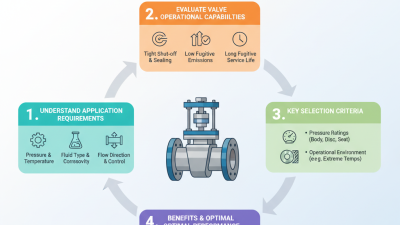
In the world of industrial applications, "valve solutions" play a critical role. They are essential for maintaining fluid control and ensuring optimal system performance. However, many overlook the intricacies involved in achieving peak efficiency. Poor valve selection can lead to leaks, reduced flow, and increased operational costs.
Understanding valve solutions is more than just knowing types and sizes. It involves a deep dive into the specific needs of your system. Consider factors like pressure, temperature, and fluid type. Each detail can significantly affect performance and longevity. Sometimes, operators become complacent. They may ignore maintenance schedules or fail to adapt to changing conditions.
Furthermore, valves must work well within the entire system. Compatibility issues may arise if not carefully addressed. Feedback loops or minor tweaks can seem unimportant, but they can lead to major system failures. Therefore, evaluating your valve solutions regularly is vital. Addressing these gaps can lead to better efficiency and significant savings in the long run.
Understanding the Role of Valves in Fluid Control Systems
Valves play a crucial role in fluid control systems, facilitating the regulation of flow, pressure, and direction. According to a recent report by the Flow Control Institute, about 80% of industrial processes rely on effective valve functionality. This reliance underscores the importance of understanding various valve types and their applications. Inadequate selection or maintenance of valves can cause leaks, inefficiencies, and costly downtime.
Proper valve sizing is essential for optimal performance. A valve that is too large can lead to turbulence, while one that is too small can restrict flow. Industry data indicates that improper sizing can result in energy losses of up to 30%. Additionally, routine inspection is critical. Valves should be monitored for wear and chemical degradation, particularly in harsh environments. Neglecting this can lead to unexpected failures.
Despite advancements, many systems do not utilize state-of-the-art technology. The latest smart valves, which provide real-time data, are still underused. A report from the International Society of Automation shows that only 25% of companies have implemented smart technologies in their fluid control systems. This gap reveals a significant opportunity for improvement in efficiency and reliability. Understanding and addressing these issues can lead to better performance and reduced operational costs.
Key Factors Influencing Valve Performance and Efficiency
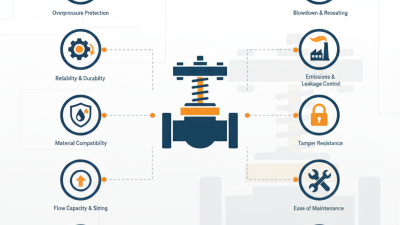
Valve performance and efficiency heavily depend on several key factors. Proper sizing of valves is crucial. A poorly sized valve can lead to significant pressure drops. According to industry research, improper sizing may result in up to 30% energy loss in a system. This inefficiency not only raises operational costs but also affects overall system reliability.
Another essential factor is material selection. Choosing the wrong materials can drastically impact performance. For instance, corrosion-resistant materials usually offer better longevity. A study from a leading engineering journal pointed out that using the right material can extend a valve's lifespan by 50%. However, this is often overlooked in many engineering designs.
Finally, maintenance plays a pivotal role in valve performance. Valves that are regularly maintained operate effectively and prevent breakdowns. However, neglecting maintenance can lead to failure. Research indicates that up to 20% of valve failures are due to lack of proper upkeep. This highlights the need for a structured maintenance schedule to maximize efficiency and reduce costs.
Maintenance Practices for Prolonging Valve Lifespan
Maintaining valves is crucial for their longevity. Regular inspection can help detect issues early. A simple visual check can uncover leaks or corrosion. For affecting valves, listen for unusual noises. This could indicate internal wear. Don’t ignore these signals; they can lead to more significant problems later.
Routine maintenance practices also play a vital role. Operators should clean valves regularly to prevent build-up. Dirt and debris can hinder operation. Lubrication is equally important. It reduces friction and wear, extending life. However, over-lubrication can attract more dirt. Finding the right balance is essential.
Training staff is another critical aspect. Not all operators understand valve mechanics. Mismanagement can cause preventable failures. Awareness of proper techniques is vital. Regular workshops can address this. Ensure all team members know maintenance schedules. This commitment can make a significant difference in valve performance.
Essential Valve Solutions Tips for Optimal Performance
| Maintenance Practice |
Frequency |
Benefits |
Common Issues Prevented |
| Regular Inspection |
Monthly |
Early identification of wear and tear |
Leakage, Valving Failure |
| Lubrication |
Quarterly |
Reduced friction and wear |
Sticking, Seizing |
| Cleaning |
Semi-Annually |
Improved flow efficiency |
Blockages, Corrosion |
| Seal Replacement |
Annually |
Maintains sealing capability |
Leakage, Pressure Loss |
| Performance Testing |
Bi-Annually |
Ensures optimal functionality |
Underperformance, Failures |
Troubleshooting Common Valve Issues and Solutions
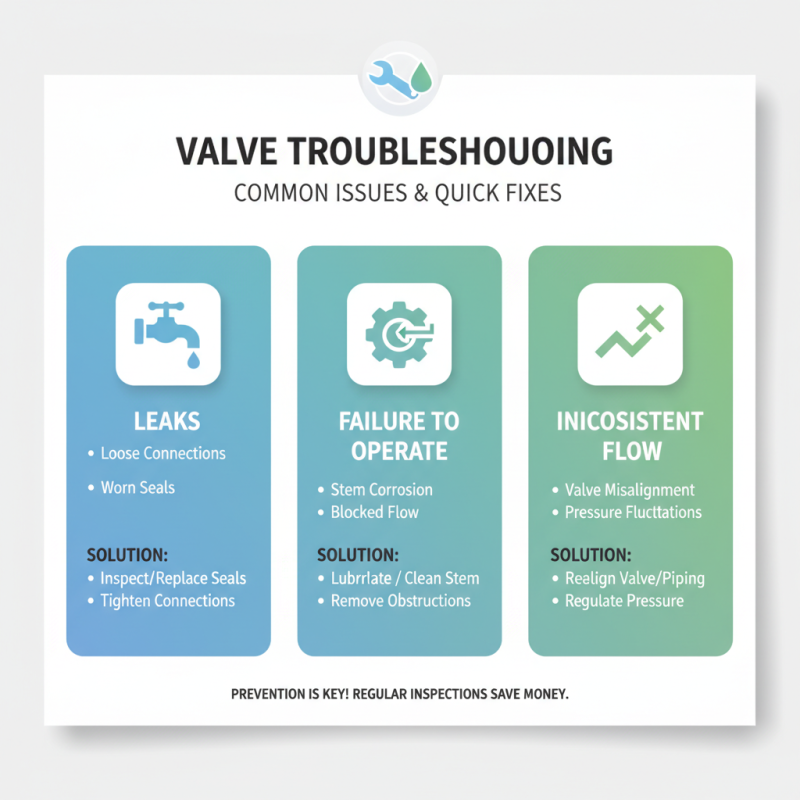
Valve issues can lead to significant operational disruptions. Identifying common problems is crucial. For instance, leaks can stem from worn seals or improper installation. Inspecting these areas regularly can prevent unwanted surprises. Always check the tightness of connections as well. Sometimes, the simplest fixes are overlooked.
Another frequent issue is valve sticking. This often occurs due to dirt accumulation or corrosion. Regular cleaning can enhance performance. If a valve does not respond correctly, it might be time for internal inspection. In some cases, you may need to replace components. It’s crucial to reflect on maintenance practices. Are they consistent, or do they happen only when issues arise?
Finally, inadequate flow can indicate a problem. Clogs or incorrectly sized valves are common culprits. A detailed flow analysis helps diagnose the issue. Regular monitoring can save time and resources. It’s essential to prioritize proactive solutions to avoid escalation. Addressing concerns early will lead to smoother operations. Make it a habit to keep an eye on your valves. This attention may prevent future complications.
Selecting the Right Valve Types for Specific Applications
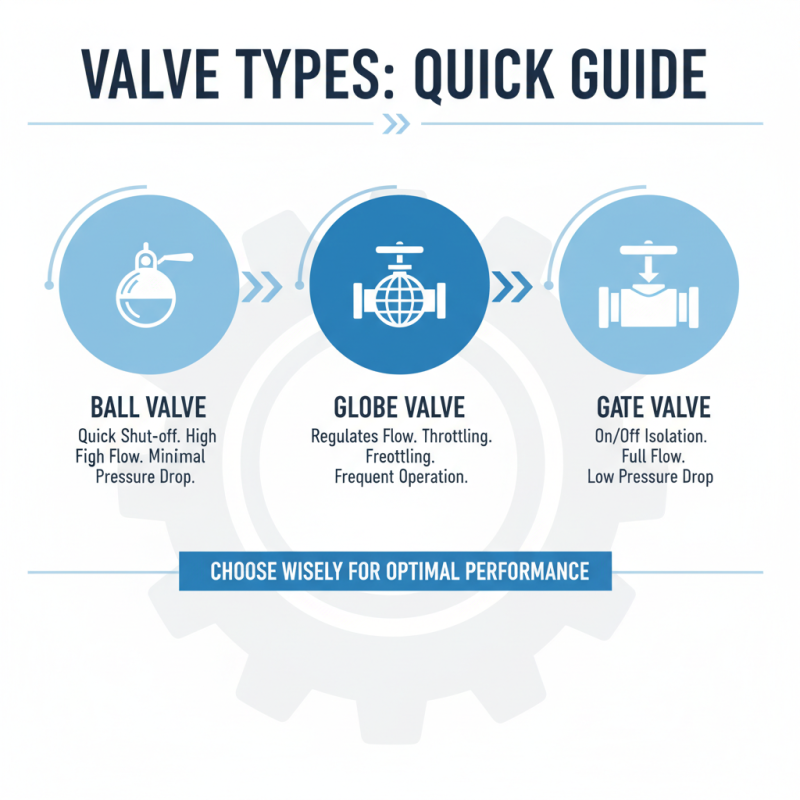
Selecting the right valve type is crucial for effective operation in various applications. Each application has unique requirements. Understanding these needs helps in making informed choices. For instance, a ball valve is excellent for quick shut-off capability. It offers minimal pressure drop and performs well in high-flow applications.
On the other hand, butterfly valves are often employed in large-scale systems. They regulate flow efficiently and require less space. However, they may not be suitable for all situations. In some cases, the torque required can be high, which could lead to potential failures.
One must also consider the materials used in valve construction. Corrosive environments may demand specific materials. A failure to account for this can result in costly repairs. Reflecting on past experiences can guide better decisions. The right valve choice can enhance performance, but it requires careful thought and planning.