Call us on: +44 (0) 1482 323163
Request a Quote
Choosing the best Pouch Machinery can shape your production costs, packaging quality, and long-term operating stability. The right system should match your pouch design, materials, output targets, and available floor space. A machine that performs well in one factory may create waste in another.
In practice, selection begins with the product. Powder, liquid, granules, and sensitive goods require different filling and sealing controls. Film thickness also affects feeding accuracy, temperature settings, and seal strength. Operators notice these differences quickly. Small details matter. A narrow seal can fail during transport, while excessive heat may distort the pouch. These problems often appear after installation, not during a polished sales demonstration.
Reliable evaluation requires more than comparing machine speed. Review documented production data, maintenance records, safety features, and changeover time. Ask suppliers about compatible films, spare parts, training, and local technical support. Request sample testing with your actual product and packaging material. Trial production reveals practical issues that brochures rarely mention. It can also expose weaknesses in cleaning access or adjustment controls.
A dependable supplier should explain limitations clearly and support recognized quality and safety practices. Still, no machine removes every production risk. Human errors, inconsistent materials, and poor maintenance can reduce performance. That reality deserves attention. The best investment balances capacity, flexibility, energy use, serviceability, and total ownership cost. This guide explores those factors through practical questions and measurable criteria, helping manufacturers choose Pouch Machinery with greater confidence and fewer expensive surprises.
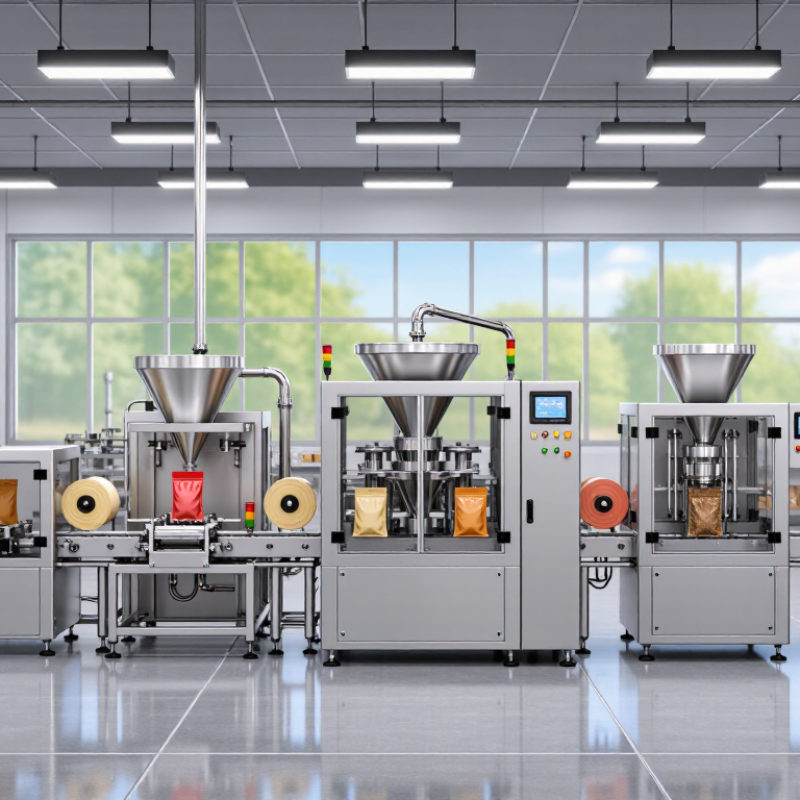
How to Choose the Best Pouch Machinery for Your Business?
Define Your Pouch Packaging Requirements
Choosing pouch machinery should begin with the product, not the machine catalog. Define the pouch format, dimensions, fill weight, material structure, closure, and required seal strength. A dry snack may need an auger filler, while liquid products require pumps and drip control. Powdery products create different dust and cleaning challenges.
Write down your real production targets. Include hourly output, operating shifts, acceptable waste, changeover time, and available floor space. Grand View Research reported that the global flexible packaging market reached about $269 billion in 2023, with continued growth through 2030. This expansion increases equipment choices, but more options can also create confusion. Do not guess.
Ask material suppliers for actual film specifications, including thickness, coefficient of friction, and sealing temperature. Then test those films on a pilot machine. A pouch that looks suitable may wrinkle, leak, or misalign during high-speed production. Small details matter.
PMMI’s 2024 industry research highlights automation, labor availability, and operational efficiency as major packaging concerns. Therefore, evaluate servo control, automatic film tracking, recipe storage, and tool-free changeovers. These features can reduce operator dependence, but they may increase maintenance complexity. That trade-off deserves honest review. Request documented test results using your product, not a substitute sample. Allow time for adjustments. Real production is rarely perfect.
| Requirement Dimension | Typical Business Requirement | Recommended Machinery Specification | Common Operating Range | Why It Matters | Priority |
|---|---|---|---|---|---|
| Pouch Format | Stand-up pouches, flat pouches, three-side-seal pouches, or spouted pouches | Select a machine designed for the required pouch construction and include compatible forming, filling, and sealing tooling. | One or more pouch formats, depending on the machine configuration | Different pouch structures require different film paths, forming systems, sealing jaws, and discharge arrangements. | High |
| Pouch Dimensions | Small sachets, medium retail pouches, or large bulk packs | Specify the minimum and maximum pouch width, length, gusset depth, and spout position before selecting equipment. | Typical flexible-pouch widths: approximately 80–400 mm; exact limits vary by machine design. | Machine size and change parts must accommodate the full range of intended pouch dimensions without compromising seal quality. | High |
| Product Type | Powders, granules, liquids, pastes, snacks, frozen foods, or non-food products | Match the dosing technology to the product: auger filler for powders, multihead or linear weigher for solids, and pump or piston filler for liquids and viscous products. | Product-specific dosing accuracy commonly ranges from approximately ±0.5% to ±2%, depending on the filler and product characteristics. | Product flowability, viscosity, particle size, and sensitivity directly affect filling accuracy, speed, and cleaning requirements. | High |
| Target Fill Weight or Volume | Single-serve packs, retail sizes, or family-size packs | Choose a dosing system whose operating range covers the target weight or volume without operating continuously at its limits. | Typical applications may range from a few grams to several kilograms, depending on the product and machine configuration. | A suitable range improves accuracy, reduces giveaway, and supports future product-size expansion. | High |
| Required Production Speed | Low-volume production, multiple shifts, or high-volume continuous production | Calculate required packs per minute from annual demand, operating days, shift hours, planned downtime, and expected product yield. | Intermittent pouch machines commonly operate around 20–80 cycles per minute; continuous systems may reach approximately 100–200 cycles per minute in suitable applications. | Buying based only on the advertised maximum speed can create unrealistic output expectations under actual production conditions. | High |
| Film Material | Heat-sealable laminates, recyclable mono-material films, foil laminates, or high-barrier structures | Verify film thickness, coefficient of friction, sealing temperature, stiffness, and web-control requirements with the machine supplier. | Flexible packaging films commonly range from approximately 50–200 micrometres in total structure thickness. | Film properties influence web tracking, forming performance, seal integrity, registration accuracy, and machine speed. | High |
| Seal Requirements | Standard hermetic seal, easy-open seal, retort seal, or tamper-evident seal | Select sealing jaws and temperature-control systems suitable for the film structure and required seal strength. | Many heat-sealing applications operate within approximately 120–220°C, depending on the film and sealing layer. | Incorrect temperature, pressure, or dwell time can cause leaks, weak seals, film distortion, or product contamination in the seal area. | High |
| Barrier and Shelf-Life Needs | Protection from oxygen, moisture, light, aroma loss, or contamination | Use a machine capable of handling the selected high-barrier laminate or mono-material structure and any required gas-flushing system. | Modified-atmosphere packaging may use nitrogen or carbon dioxide, depending on product requirements and validated gas ratios. | Packaging machinery must preserve the intended barrier performance through accurate filling, sealing, and leak prevention. | High |
| Changeover Frequency | One main product, several pouch sizes, or frequent short production runs | Prioritize tool-less adjustments, recipe management, digital setup instructions, and quick-change forming components. | Basic changeovers may take about 30–90 minutes; optimized systems can reduce repeat changeovers substantially. | Shorter changeovers increase equipment availability and reduce labor, material waste, and downtime between products. | Medium |
| Automation Level | Manual operation, semi-automatic production, or fully automatic packaging | Consider automatic film splicing, weight feedback, pouch inspection, reject handling, and machine-to-line communication. | Automation can support continuous operation with fewer manual interventions, but requires trained operators and reliable upstream feeding. | The appropriate level of automation should match labor availability, production volume, quality targets, and investment capacity. | Medium |
| Quality Control | Accurate fill weights, correct seals, readable codes, and consistent pouch appearance | Include checkweighing, seal inspection, metal detection or X-ray inspection where appropriate, vision systems, and automatic reject devices. | Inspection equipment should be validated against the product, pack size, line speed, and applicable legal requirements. | Inline quality checks help identify underweight packs, open seals, foreign material, incorrect labels, and coding errors before shipment. | High |
| Hygiene and Cleaning | Dry food, wet food, dusty products, allergen-containing products, or chemical products | Specify stainless-steel contact parts, accessible surfaces, dust extraction, washdown compatibility, and tool-free removal where required. | Cleaning frequency depends on product residue, allergen controls, sanitation procedures, and production scheduling. | Hygienic design reduces contamination risk, supports regulatory compliance, and shortens cleaning and inspection time. | High |
| Utilities | Available electrical supply, compressed air, vacuum, and production-room services | Confirm voltage, frequency, connected load, compressed-air pressure and flow, exhaust needs, and temperature-control requirements. | Many automated packaging lines use approximately 6–8 bar compressed air, while actual consumption varies by configuration. | Insufficient utilities can reduce speed, cause unstable sealing or dosing, and lead to unplanned production interruptions. | High |
| Available Floor Space | Compact facility, dedicated packaging room, or integrated production line | Measure machine footprint, operator access, film-roll handling space, maintenance clearance, conveyors, and safety zones. | Allow additional space beyond the listed machine dimensions for operation, cleaning, servicing, and material movement. | A machine that fits physically may still be unsuitable if operators cannot safely access controls, tooling, or maintenance points. | Medium |
| Compliance Requirements | Food, pharmaceutical, cosmetic, chemical, or export-market production | Define applicable requirements for machine safety, electrical systems, food contact materials, traceability, validation, and documentation. | Requirements vary by product category, installation location, and destination market. | Compliance should be confirmed before purchase because retrofitting documentation, guarding, or hygienic features can be costly. | High |
| Total Cost of Ownership | Limited initial budget, growth investment, or long-term automated operation | Compare purchase price with tooling, installation, training, energy, consumables, spare parts, maintenance, labor, and expected downtime. | Evaluate cost over the planned service life rather than comparing equipment only by initial price. | Lower operating cost, reduced waste, reliable local support, and maintainability can outweigh a lower purchase price. | High |

© Shipham Valves 2025. All Rights Reserved.
Website By PS Website Design Ltd
Request a Quote/Further Information
Download