How to Choose the Right DC Isolation Switch for Your Needs?
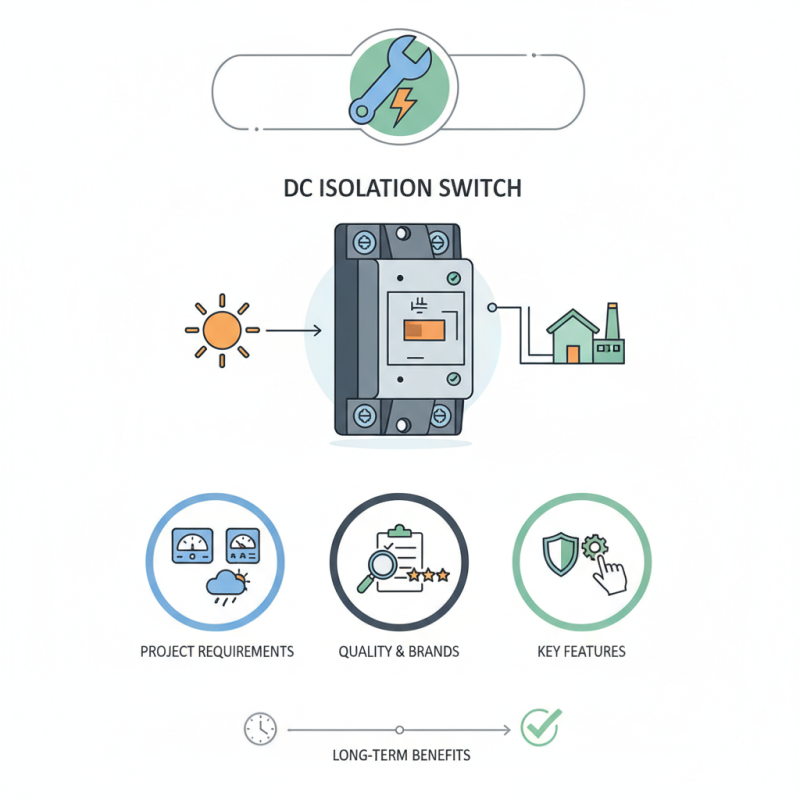
Choosing the right DC Isolation Switch can be challenging. It is critical for ensuring safety in your electrical systems. A DC Isolation Switch allows for the safe disconnection of direct current power sources. This is essential in both residential and industrial applications.
Consider the specific requirements of your project when selecting a switch. Think about the voltage, current ratings, and environmental factors. These details can significantly impact performance. Often, people overlook these crucial aspects. They may choose a switch based solely on price. This could lead to inadequate safety measures and system failures.
Evaluating different brands and models is also important. Not all switches provide the same quality. Research and read reviews to make an informed decision. An ideal DC Isolation Switch should have clear labeling, reliable construction, and easy operation. Remember, investing time in selecting the right switch pays off in the long run. Your safety and equipment reliability depend on it.
Understanding DC Isolation Switches: Key Functions and Benefits
DC isolation switches are crucial for protecting electrical systems. They act as a barrier, ensuring safety during maintenance. These switches disconnect the direct current supply, preventing accidental energization. According to the International Energy Agency (IEA), the use of such switches can enhance safety by reducing downtime by up to 30%.
Understanding their key functions is vital. A reliable DC isolation switch should be easy to operate and maintain. It must handle high voltage and current levels effectively. Performance under various conditions is also important. The switch should endure harsh environments without failure. Data from industry reports shows that over 40% of failures in electrical systems stem from inadequate isolation.
Tips: Always assess your power requirements before purchasing. Match the switch specifications to your system's voltage and current levels. Monitor the environment in which it will operate, as extreme temperatures can impact performance. Regular maintenance of isolation switches is often overlooked, yet it's essential for reliability.
Investing time in proper selection and maintenance can greatly extend the life of your electrical systems. An average lifespan for a quality isolation switch is around 10 years, but neglect can shorten this significantly. Understanding these factors helps ensure you make the right choice.
Key Specifications to Consider When Choosing a DC Isolation Switch
When choosing a DC isolation switch, several key specifications matter. The voltage and current ratings are crucial. According to industry reports, switches often handle up to 1,500 volts and 20 amps. Selecting a switch beyond these ratings can lead to malfunctions. Underestimated ratings may cause safety hazards.
The environmental conditions also play a significant role. A switch used outdoors must withstand elements like moisture and dust. Studies show that up to 30% of DC switch failures are due to environmental stress. It’s vital to assess the IP (Ingress Protection) rating to ensure durability.
Finally, consider the physical size and installation requirements. Compact spaces might not accommodate larger models. Often, a standard switch may not fit. Hence, always verify dimensions before purchase. A switch that doesn’t fit is a waste of resources and time, reflecting a miscalculation in the selection process.
DC Isolation Switch Key Specifications Comparison
Industry Standards and Ratings for Safety and Performance in DC Switches
When selecting a DC isolation switch, safety and performance standards are crucial. Various industry standards guide manufacturers in producing reliable switches. These standards ensure that devices can handle specific voltages and currents. Many tests evaluate short-circuit resistance and thermal performance. Compliance with these guidelines protects users and equipment.
Consider the application of the switch. Different setups might need different ratings for effective operation. Look for products that meet international safety criteria. Sometimes, discrepancies arise when standards vary by region. Users may overlook these details, leading to poor performance or even hazards. It's essential to understand what your specific requirements are.
Moreover, it’s vital to pay attention to materials used in construction. Some switches utilize high-quality materials that can withstand harsh conditions. Others may not. Durability and environmental resistance should be key considerations. In the long run, investing in a quality switch often pays off. However, neglecting these factors can result in unwanted failures. Always reflect on past experiences when making a choice.
How to Choose the Right DC Isolation Switch for Your Needs?
| Parameter | Description | Standard Rating | Recommended Usage |
| Voltage Rating | Maximum continuous voltage that the switch can safely handle | 600V DC | Solar applications, Battery storage systems |
| Current Rating | Maximum continuous current that the switch can handle | 250A | Large scale solar arrays, Industrial systems |
| Ingress Protection (IP) Rating | Level of protection against dust and water | IP65 | Outdoor installations |
| Actuation Type | Mechanism to operate the switch | Manual, Motorized | Remote operation in inaccessible locations |
| Temperature Rating | Operating temperature range | -20°C to +60°C | General applications in temperate climates |
Comparative Analysis of DC Isolation Switch Types and Applications
When selecting a DC isolation switch, understanding the different types is essential. There are various options available like manual, motorized, and electromechanical switches. Each type serves a specific purpose and fits different applications. Manual switches offer simplicity. They require human operation, which may lead to potential safety risks if not used properly. Motorized models provide automated control but can fail if not maintained. Electromechanical options offer robust performance but often have higher costs.
Tips: Consider the environment. If your application is in extreme conditions, ensure the switch can handle it. There is a need for regular checks. This helps to avoid malfunction or unexpected downtime.
Choosing an isolation switch requires careful thought. Reflect on the required amperage and voltage ratings. Miscalculating these could lead to equipment damage. Dual-pole options might be necessary for specific needs. Yet, they can be more complex to install. Always weigh the pros and cons.
Tips: Understand the load type. Resistive loads behave differently than inductive loads. Assessing the load characteristics is vital. It affects the switch's lifespan and efficiency. Not all switches are created equal. Don’t overlook this essential detail.
Maintenance and Lifecycle Considerations for DC Isolation Switches
When selecting a DC isolation switch, maintenance and lifecycle are critical factors. Reports indicate that proper maintenance can extend the lifecycle of these switches by 25%. Regular inspections help identify wear and tear. This prevents unexpected failures and costly downtime.
Over time, DC isolation switches are exposed to harsh environments. Environmental stress can lead to corrosion or mechanical failure. Implementing a routine maintenance schedule is essential. It should include regular cleaning and lubrication. Keeping connections tight reduces resistance and heat generation, enhancing switch longevity.
Tips: Check for any signs of rust. Inspect connections every month. Consider a maintenance log to track issues over time. Unforeseen challenges may arise. Preparing for them can mitigate risks. A proactive approach ensures reliability in critical applications.