How to Choose the Best Sticky Product Optical Sorter?
When selecting the best Sticky Product Optical Sorter, the choice can be overwhelming. Industry expert Dr. Emily Chen states, “Finding the right sorter can significantly enhance efficiency.” Her experience with various sorting technologies reveals the importance of careful consideration.
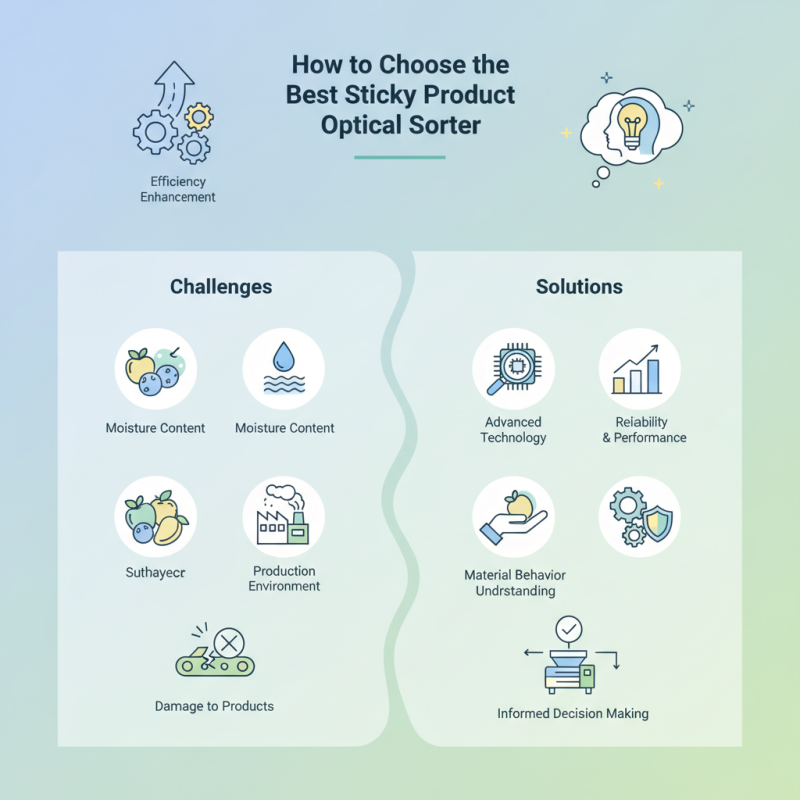
Sticky products, like fruits or soft materials, pose unique challenges in sorting. A high-performance sorter must handle these items without damaging them. This requires advanced technology and an understanding of material behavior. Factors like material type, moisture content, and the production environment all play crucial roles.
It's essential to evaluate options based on reliability and performance. Not every solution meets all operational needs. Sometimes, a feature that seems beneficial may cause more issues. Reflecting on past experiences can provide insights into potential pitfalls. Proper assessment leads to informed decision-making for the best Sticky Product Optical Sorter.
Understanding the Purpose of Sticky Product Optical Sorters
Sticky product optical sorters play a crucial role in food processing and recycling. These machines detect and separate sticky items, ensuring product quality. They are particularly useful for items like fruits, vegetables, and other perishable goods. Understanding their purpose helps in choosing the right sorter for your needs.
When selecting a sticky product optical sorter, consider these tips: Look for machines with adjustable settings. Different sticky products require different sorting parameters. A versatile machine can adapt to various products, improving efficiency. Ensure the sorter has a reliable camera system. High-resolution cameras can accurately identify unwanted materials, reducing inaccuracies.
Also, evaluate the machine’s maintenance needs. Regular upkeep is essential to prevent downtime. Some machines may need frequent cleaning, while others have self-cleaning features. Carefully weighing these factors can significantly impact productivity. Reflect on your specific requirements and challenges. It's essential to find a sorter that balances efficiency with your operational goals.
Key Features to Consider in Optical Sorters for Sticky Products
When selecting an optical sorter for sticky products, specific features make a significant difference. Sticky materials, such as fruits or candies, pose unique challenges. An effective sorter should have advanced imaging technology. This helps in clear differentiation, even under moist conditions. Industry data shows that improper sorting can lead to a 15% loss in profits for manufacturers dealing with sticky items.
Another crucial feature to consider is a robust cleaning mechanism. Sticky residues can quickly impede operational efficiency, which may result in costly downtime. Systems that include automatic cleaning processes are beneficial. They ensure consistent performance and reduce manual labor. According to recent reports, an effective cleaning feature can enhance sorter uptime by 25%, bolstering overall productivity.
Finally, adaptability is essential. Optical sorters must be able to adjust settings based on product variations. This capability can save time and reduce waste during sorting processes. Research indicates that flexibility in sorting parameters can boost sorting accuracy by up to 30%. Manufacturers may find investing in these technologies enhances both output quality and operational reliability, leading to sustainable production practices.
How to Choose the Best Sticky Product Optical Sorter? - Key Features to Consider in Optical Sorters for Sticky Products
| Feature | Importance | Considerations |
| Sorting Accuracy | High | Look for advanced sensors and algorithms |
| Product Handling | Medium | Evaluate the feeder design to minimize jams |
| Cleaning Mechanism | High | Integrated cleaning features to handle stickiness |
| Throughput Rate | High | Rate at which the sorter can process products |
| User Interface | Medium | Ease of use and accessibility of settings |
| Integration Capability | Medium | Compatibility with existing processing lines |
| Maintenance Requirements | High | Frequency and ease of maintenance tasks |
Evaluating Sorting Accuracy and Efficiency in Optical Equipment
Choosing the right optical sorter for sticky products can be challenging. Sorting accuracy and efficiency are crucial. According to a recent industry report, optical sorters can achieve over 90% accuracy in sorting various materials. This accuracy is vital, especially when dealing with sticky items that may merge or clump together.
Sorting efficiency matters too. Reports indicate that higher ejection rates correlate with better overall productivity. It's essential to assess how quickly the sorter can handle volumes without compromising accuracy. Consider factors like speed and sensitivity settings, as they significantly impact performance. Proper calibration can enhance sorting outcomes, but many companies overlook this aspect.
Another factor to evaluate is the optical system's ability to adapt to diverse products. Sticky items can vary greatly in texture and color, posing unique challenges. Some optical sorters struggle with product variation, leading to potential misclassification. Regular assessments of the equipment’s performance should be conducted to ensure it meets necessary standards.
Analyzing Maintenance and Support Services for Optical Sorters
When selecting the best optical sorter for sticky products, maintenance and support services are pivotal. Proper service ensures the longevity and efficiency of the machinery. Regular maintenance plays a key role in performance. Technical issues can arise unexpectedly, leading to downtime. Without a well-structured support system, manufacturers may face excessive costs and delays.
Experienced technicians can diagnose issues quickly. A reliable service provider will understand specific machinery needs better than anyone else. Training personnel is equally important; operators must know how to handle minor faults. This knowledge minimizes disruptions and maximizes output.
Consideration of parts availability is vital too. Delays in securing parts can severely impact operations. Assess how responsive support services are to requests. An optimal choice balances quality and reliability. Reflect on past experiences with service; this offers insights into the expected level of ongoing support.
Comparing Costs and ROI for Different Sticky Product Optical Sorters
When evaluating sticky product optical sorters, costs and ROI are crucial factors to consider. A range of options exists on the market, each with different capabilities and price points. Understanding these aspects can help businesses make informed decisions that align with their production goals.
The initial cost of a sorter can be substantial. Some models may require a higher upfront investment but offer enhanced efficiency and accuracy. This can lead to higher quality product output, reducing waste. Analyzing the long-term savings from decreased labor costs and improved throughput is vital. ROI can often justify a higher initial expenditure if the machine operates efficiently and lasts longer.
Not all systems will meet every business's needs. Some may struggle with specific sticky products, leading to unsatisfactory results. It's essential to assess how well a sorter fits your operations. Frequent disruptions can affect productivity and ultimately the bottom line. Reviewing the experiences of similar companies can provide valuable insights, helping to strike a balance between price and performance.