How to Choose a Y Type Strainer for Global Buyers

Choosing a y type strainer is a practical engineering decision, not a simple catalog exercise. Global buyers must match filtration performance with fluid properties, pressure limits, installation space, and local standards. A small mismatch can leave a stainless-steel pipeline exposed to debris, vibration, or repeated maintenance.

The market context is significant. MarketsandMarkets’ Industrial Filtration Market report estimates that industrial filtration could grow from approximately USD 29.8 billion in 2023 to USD 44.3 billion by 2028. The report also reflects rising demand for reliable process protection across water, chemical, energy, and manufacturing applications. Meanwhile, the UN World Water Development Report 2024 highlights continuing pressure on global water systems. It reports that about 2.2 billion people lacked safely managed drinking water in 2022. These trends make dependable flow protection increasingly important.

This guide explains how to evaluate a y type strainer before purchase. It considers screen mesh, flow direction, pressure drop, temperature, body material, connection type, and cleaning access. Buyers should also review relevant specifications, including ASME flange requirements and applicable pressure-testing practices. Exact compliance depends on the project and destination market. Be careful here. Public industry reports rarely separate y type strainer sales from broader filtration categories. That limitation makes supplier verification essential. Request material certificates, pressure ratings, dimensional drawings, and test records. A clear photo of the basket and drain plug can reveal more than a polished brochure.

How to Choose a Y Type Strainer for Global Buyers

Y Type Strainer Basics and Its Role in Fluid Systems

How to Choose a Y Type Strainer for Global Buyers

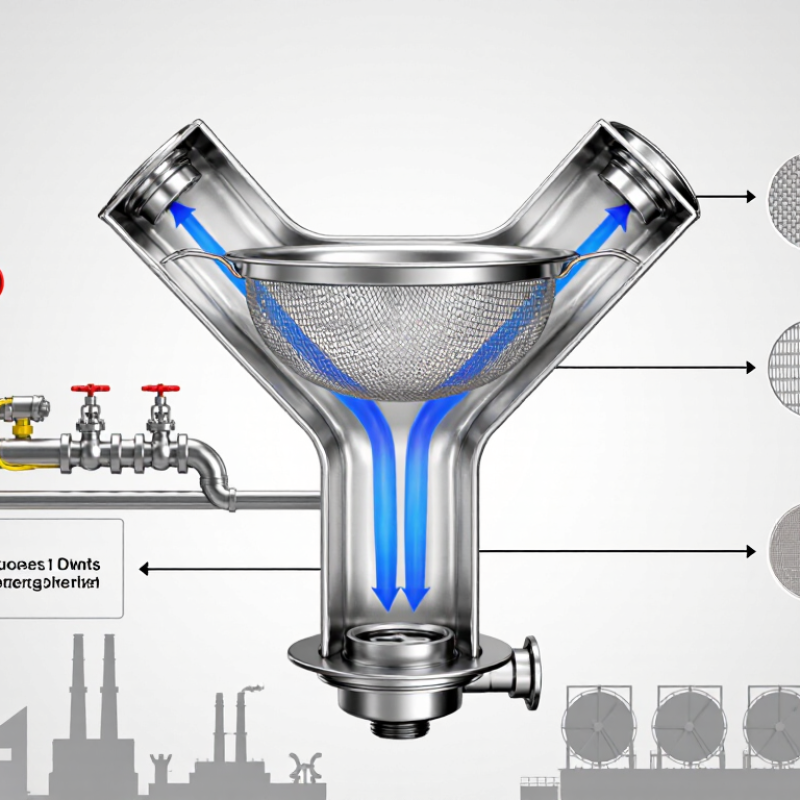
A Y type strainer is a compact filter installed in a fluid pipeline. Its angled body traps rust, scale, sand, and welding debris before they reach sensitive equipment. Pumps, control valves, meters, and heat exchangers often depend on this protection. The strainer does not purify fluid. It only removes solid particles within its selected filtration range.

Begin with the fluid, pressure, temperature, and pipe connection. Stainless steel suits many corrosive services, while carbon steel may fit less aggressive systems. Check the screen mesh carefully. A fine mesh captures smaller particles but can create faster pressure loss. That trade-off is easy to underestimate.

Field inspections often find clogged screens because the mesh was selected without reviewing actual debris levels. Not ideal.

Installation direction matters. The branch normally points downward, allowing debris to collect in the screen chamber. Leave enough clearance for safe screen removal and draining. For steam or high-temperature service, confirm material ratings and sealing performance against recognized standards. Global buyers should also verify flange dimensions, thread specifications, pressure classes, and local documentation requirements. A differential-pressure gauge can show when cleaning is necessary. Without one, maintenance becomes guesswork. Regular inspection remains important, even when the pipeline appears clean.

Key Selection Factors for Global Industrial Applications

How to Choose a Y Type Strainer for Global Buyers

Key Selection Factors for Global Industrial Applications

Choosing a Y type strainer begins with the fluid, not the pipe size. Identify viscosity, temperature, pressure, and corrosive behavior. Water, steam, oil, and chemical fluids require different body and screen materials. Stainless steel may suit corrosive service, while carbon steel can work in controlled environments. Confirm compatibility with the fluid and process temperature.

Flow rate also matters. A screen that is too fine may protect equipment but create frequent pressure loss. A coarse screen may reduce maintenance but allow harmful particles through. Check the required filtration rating, connection standard, installation orientation, and available space. For global projects, request clear test reports, material certificates, dimensional drawings, and pressure ratings. Local standards can differ, so technical documents must be reviewed before purchase.

Tips: Measure the pipeline twice. Leave room for screen removal. Check the drain position. Keep a spare screen for critical service. In my experience, buyers often focus on the lowest price first. That can be a costly mistake. However, oversized strainers are not always better. They may increase cost and complicate maintenance. A perfect selection is rarely possible without operating data, so record actual pressure loss after installation and reassess the choice.

How to Match Strainer Materials with Different Fluids

Choosing a Y type strainer starts with the fluid, not the pipe size. In field inspections, I check temperature, pressure, concentration, flow direction, and cleaning access before comparing materials. Water service may suit cast iron or carbon steel, but treated water can change the decision. Chlorides attack ordinary stainless steel over time. Small details matter.

For seawater and coastal systems, 316 stainless steel offers better chloride resistance than 304. Higher chloride loads may require duplex stainless steel, especially around warm, stagnant sections. Mild acids need careful review of both the body and screen. PTFE-lined parts can handle some aggressive chemicals, while elastomers may swell or harden. Do not match the metal alone. Check the gasket. For oils and fuels, carbon steel often performs well, but seal compatibility depends on temperature and additives. Steam service demands materials rated for heat, pressure, and repeated thermal cycling.

Screen openings should protect downstream equipment without creating excessive pressure loss. A fine mesh can clog quickly in dirty process water. I have seen a chemically suitable strainer fail because its gasket was overlooked. That mistake is easy to repeat. Request a compatibility chart, test data, and the fluid’s safety information from the supplier. Then verify the selection against local installation standards and maintenance practices. The perfect material choice is not always obvious. Lab data may not reflect contamination, heat spikes, or poor drainage in the field. This is where a second technical review is worthwhile.

Choosing the Right Size, Screen, Pressure, and Connection Type

How to Choose a Y Type Strainer for Global Buyers

Choosing the right Y type strainer starts with the pipe size, but size alone is not enough. Match the strainer to the actual flow rate and acceptable pressure drop. A body that matches the pipe can still restrict circulation when the screen area is too small. Leave enough clearance for cleaning and screen removal. It sounds obvious. It is often missed.

Screen selection depends on the fluid and the equipment downstream. A fine mesh can protect control valves, pumps, and heat exchangers, but it may clog quickly in dirty water. A coarse screen offers lower resistance and longer service intervals. Check the screen material for corrosion resistance and confirm the open-area ratio. Do not judge filtration by mesh number alone. This choice deserves more attention.

Pressure rating and temperature limits must cover the real operating range, including startup surges. For steam, hot oil, or compressed gas, use verified pressure-temperature data rather than a basic pressure label. Connection type is equally important for global projects. Flanged, threaded, and socket-weld ends require compatible pipe standards, dimensions, gaskets, and installation tools. Confirm the standard with the site engineer before ordering. I would also check drain orientation and maintenance access, because a technically correct selection can become inconvenient in the field. Some decisions look perfect on paper. Reality may disagree.

Installation, Maintenance, and International Compliance Considerations

How to Choose a Y Type Strainer for Global Buyers

Installation, maintenance, and compliance often determine whether a Y type strainer performs reliably overseas. Select the body material, pressure class, screen mesh, and connection standard together. The flow arrow must match the pipeline direction. Install the screen pocket downward on liquid lines. This allows debris to collect safely. Leave enough clearance for screen removal. It sounds obvious, but crowded valve stations often ignore this detail.

Fit isolation valves and a drain connection where possible. A differential-pressure gauge helps operators identify clogging before flow collapses. During commissioning, flush the pipeline and inspect the screen after initial operation. For international projects, verify applicable requirements before purchase. Pressure equipment may require the EU Pressure Equipment Directive 2014/68/EU. Flanges may follow ASME B16.5 or relevant EN standards. Pressure and leakage tests should match the contract and applicable standards, including ISO 5208 where specified. Material certificates, often EN 10204 3.1, improve traceability.

Maintenance should include depressurization, drainage, and lockout procedures. Never open the cover on a pressurized line. Inspect mesh damage, gasket compression, corrosion, and bolt condition. The U.S. Department of Energy’s Operations and Maintenance Best Practices Guide reports that preventive maintenance can reduce costs by approximately 12–18% compared with reactive maintenance. Actual savings vary. A fixed cleaning calendar is not always correct. Monitor pressure loss, fluid contamination, and operating hours instead. Keep replacement screens and gaskets available at the destination site. Small parts can create long delays.

How to Choose a Y Type Strainer for Global Buyers — Installation, Maintenance, and International Compliance Considerations
Selection Dimension Recommended Data or Range Technical Consideration Installation and Maintenance Guidance International Compliance Consideration
Process Medium Water, chilled water, glycol solutions, compressed air, steam, oil, and compatible chemicals Confirm chemical compatibility of the body, screen, gasket, and drain plug with the actual fluid, concentration, and operating temperature. Flush the pipework before installation. For contaminated or corrosive media, establish a more frequent inspection schedule. For potable-water service, use materials and sealing components that are approved for the destination market’s drinking-water regulations.
Nominal Size Commonly DN15–DN300 or approximately 1/2–12 in Select the connection size to match the pipeline while avoiding unnecessary reducers that can increase pressure loss. Provide sufficient clearance below the strainer cap for screen removal and cleaning. Larger sizes may require lifting or access equipment. Check whether the required dimensional standard is ASME, EN, ISO, JIS, or another national piping standard.
Connection Type Threaded, flanged, socket-weld, or butt-weld connections Threaded ends are commonly used on smaller sizes; flanged and welded ends are generally preferred for larger or higher-duty systems. Install the strainer with the flow arrow pointing in the direction of flow. Use correct gasket alignment and avoid over-tightening threaded connections. Threaded connections may require NPT or ISO 228-1 compatibility. Flanges may need to conform to ASME B16.5, ASME B16.47, EN 1092-1, or the project specification.
Body Material Carbon steel, stainless steel, ductile iron, cast iron, or bronze Material selection depends on pressure, temperature, corrosion risk, fluid chemistry, and required service life. Inspect for external corrosion, coating damage, casting defects, and leakage around joints during routine service. Request material certificates and verify the applicable material designation, pressure-temperature rating, and traceability requirements.
Filter Screen Material Typically stainless steel or another corrosion-resistant alloy The screen must withstand the operating pressure, temperature, vibration, and chemical environment without distortion or rapid corrosion. Remove and clean the screen when the differential pressure reaches the system’s defined limit. Replace screens that are torn, permanently deformed, or heavily corroded. For regulated applications, confirm that the screen material and surface finish meet the required hygiene, corrosion, or product-contact rules.
Screen Opening Typical options include approximately 0.5–3.0 mm for coarse protection; finer filtration requires application-specific selection Choose the smallest opening that protects downstream equipment without causing excessive pressure loss or frequent blockage. Use a temporary start-up screen or perform an early inspection after commissioning if the pipeline may contain welding debris, scale, or construction residue. Screen opening should be stated in millimetres or mesh with a clearly defined measurement method; mesh numbers are not directly interchangeable across standards.
Pressure Rating Common industrial ratings include PN10, PN16, PN25, Class 150, and higher ratings where specified The allowable pressure depends on body material, temperature, connection design, and the governing rating standard. Do not select by nominal pressure alone. Install isolation valves upstream and downstream when practical so the strainer can be serviced without draining the entire system. For equipment within the European Economic Area, determine whether the Pressure Equipment Directive 2014/68/EU applies and follow the relevant conformity route.
Operating Temperature Common water-service applications may operate from near freezing to approximately 120°C; steam and high-temperature service require special design Check the complete pressure-temperature curve, including gasket limits and thermal expansion effects. Prevent freezing in water-filled systems. Allow the unit to cool and depressurize before opening the cap. Use insulation only when it does not obstruct inspection or drainage. Temperature ratings, test requirements, and marking rules may vary by destination market and product category; retain the manufacturer’s rating documentation.
Flow Direction and Orientation Install in the direction indicated by the flow arrow, with the screen chamber generally oriented downward or within the permitted installation angle Correct orientation allows particles to collect in the chamber and reduces the risk of bypassing the screen. Do not install the unit upside down unless the design specifically permits it. Support adjacent pipework to prevent excessive mechanical load on the body. Follow the installation instructions and project piping specifications; orientation may affect declared performance and inspection requirements.
Pressure Drop Evaluate clean-screen pressure drop and define an allowable service limit; the actual value depends on flow rate, fluid properties, and screen opening A dirty screen creates higher pressure loss and may reduce pump performance or downstream equipment flow. Install differential-pressure measurement points when continuous monitoring is important. Record clean and dirty pressure-drop values during commissioning. Where performance data is declared, ensure the test method, fluid, flow rate, screen condition, and units are clearly documented and comparable.
Drain Arrangement Threaded or flanged drain connection, with optional valve or removable plug The drain must be rated for the system pressure and suitable for safe discharge of the retained medium and debris. Provide a safe collection or disposal route. Isolate, depressurize, and verify temperature before opening the drain or cap. Hazardous, hot, or environmentally regulated fluids may require local discharge controls, containment, labeling, and documented operating procedures.
Gasket and Seal Selection Elastomeric or composite seals selected for the fluid and temperature range Seal compatibility affects leakage resistance, service life, and maintenance intervals. Avoid mixing incompatible gasket materials. Replace damaged or compressed seals during screen servicing. Clean sealing faces and tighten fasteners evenly to the specified torque. For food, pharmaceutical, or potable-water systems, verify applicable material-contact and hygiene requirements in the importing country.
Maintenance Interval Initial inspection after commissioning, followed by condition-based or scheduled inspections Actual frequency depends on debris load, fluid quality, flow stability, and the acceptable pressure drop of downstream equipment. Inspect the screen, cap, drain, gasket, body, and connections. Keep records of cleaning dates, pressure-drop readings, and replacement parts. Maintenance documentation may support warranty, regulatory audits, plant safety procedures, and customer acceptance requirements.
Testing and Documentation Pressure test, leakage test, dimensional data, material information, operating instructions, and inspection records Documentation should identify size, connection standard, pressure class, material, screen opening, temperature range, and test basis. Keep installation and maintenance instructions available at the equipment location and train personnel in isolation and depressurization procedures. Depending on the market and application, documentation may include a declaration of conformity, test certificate, material certificate, country-of-origin information, and tariff classification data.
Import and Packaging Review Export-ready packaging with corrosion protection, connection protection, product identification, and packing list Protect machined faces, threads, screens, and coated surfaces from impact, moisture, and contamination during transport. Inspect the shipment before installation and record any damage or missing components. Store the strainer in a dry, clean location. Verify customs documents, marking requirements, wood-packaging rules, language requirements, and any destination-specific certification before shipment.
Buyer’s Final Checklist Medium, flow rate, size, connection, pressure, temperature, screen opening, material, standard, certificates, and spare parts A complete data sheet prevents incorrect substitutions and allows the supplier to confirm suitability for the intended service. Request recommended spare screens, gaskets, drain components, and installation tools when downtime would be costly. Confirm all requirements against the purchase specification and destination-country regulations before placing the order.

Request a Quote/Further Information

    Download