Choosing a Square Pipe Making Machine in 2026 requires more than comparing prices or browsing attractive brochures. The right decision depends on production volume, material grades, tube dimensions, and expected surface quality. A machine designed for thin galvanized steel may struggle with thicker carbon steel. That difference matters.
Experienced manufacturers usually begin with a clear production profile. Record the target square sizes, wall thickness range, coil width, steel grade, and monthly output. Then examine forming stands, welding technology, sizing accuracy, cutting performance, and line speed. Ask suppliers for sample pipes, dimensional reports, and references from comparable factories. A serious supplier should explain maintenance intervals, energy use, spare-part availability, and operator training. Vague answers deserve caution.
Look closely at the details.
In a real workshop, a stable line should produce consistent corners, clean welds, and limited adjustment downtime. Automatic controls can improve repeatability, but they cannot replace skilled supervision. This is where many purchasing plans become too optimistic. High speed sounds impressive, yet unstable feeding can create scrap, damaged rollers, and delayed deliveries. The cheapest machine may become expensive after installation.
This guide considers practical selection criteria for 2026, including automation, safety systems, production flexibility, service support, and long-term operating costs. It also examines common mistakes, because specifications alone never tell the whole story. A reliable Square Pipe Making Machine should match your actual workflow, not an imagined one. Review every claim carefully. Good decisions usually come from measured requirements, factory evidence, and honest discussion with experienced technical teams.
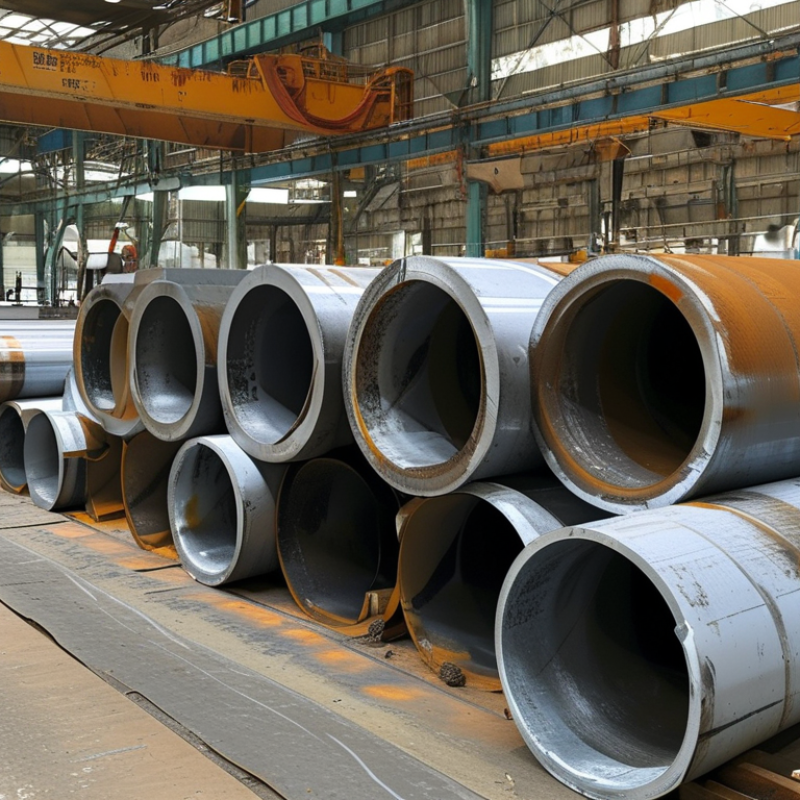
How to Choose a Square Pipe Making Machine in 2026?
Define output standards before comparing machine prices. ASTM A500 square tubing commonly includes Grade B, with a minimum yield strength of 46 ksi, and Grade C, at 50 ksi. Their minimum tensile strengths are 58 ksi and 62 ksi, respectively. These values come from ASTM A500/A500M requirements. A machine should maintain stable forming pressure, weld alignment, and cooling conditions across both grades.
Wall control deserves closer attention. A stated ±10% wall tolerance requires accurate strip leveling, automatic thickness monitoring, and regular gauge calibration. For a 6.0 mm wall, the working range becomes roughly 5.4–6.6 mm. Small errors become visible at the welded seam and corners. ASTM inspection practices may also require dimensional checks, flattening tests, and tensile verification. Do not trust only the machine display.
Production scale matters. The World Steel Association reported about 1.89 billion tonnes of crude steel production worldwide in 2023, showing the continuing pressure for efficient, repeatable processing. Choose a mill with quick roll-change access, documented trial records, and traceable inspection data. Ask for samples made from your actual coil grade. Real coils behave differently. That detail is easy to underestimate. A cautious buyer should also review scrap rates, line speed under tolerance control, and the supplier’s response when the first trial fails.

How to Choose a Square Pipe Making Machine in 2026?
A square pipe making machine should match 20–200 mm tube sizes and 0.5–12 mm wall thickness. This range demands more than a powerful motor. It requires stable forming stands, accurate roll adjustment, and reliable weld control. Thin 0.5 mm strip can buckle near the forming section. Thick 12 mm material needs stronger drive capacity and slower, controlled welding. The World Steel Association reported global crude steel production of about 1.89 billion tonnes in 2023. That scale shows why material efficiency and repeatable production matter to modern tube manufacturers.
Check the machine’s real operating range, not only its brochure range. Ask for trial records using your target steel grade, width, and thickness. A 20 mm tube may need fine roll alignment, while a 200 mm section needs higher forming stability. The 2024 Global Steel Pipe Market reports from Research and Markets identify construction and infrastructure as major demand areas, where dimensional consistency affects installation speed. However, market reports cannot replace factory testing. I have seen small alignment errors create visible corner marks. That detail is easy to underestimate.
Tips: Confirm minimum and maximum sizes separately. Request sample measurements from four corners. Check weld bead trimming at 0.5 mm thickness. Test 12 mm production under continuous load. Leave adjustment space for future sizes. A perfect specification sheet may still hide practical limits.
Estimated steel mass per metre for square hollow sections from 20–200 mm with wall thicknesses from 0.5–12 mm.
Larger tube dimensions and thicker walls require greater strip width, forming force, welding capacity and motor torque. Use this chart for preliminary machine sizing. Values are theoretical masses calculated from square hollow-section geometry and a steel density of 7,850 kg/m³; corner radii, weld allowance and production tolerances are not included.
How to Choose a Square Pipe Making Machine in 2026?
Choosing a square pipe making machine in 2026 starts with the weld, not the brochure. Your HF system must suit steel grades from 235 to 460 MPa. Higher strength does not automatically require proportionally higher power. That assumption causes expensive oversizing. In production trials, power demand follows tube diameter, wall thickness, strip width, line speed, and electrical efficiency. Match HF welding power to the actual production range.
For 235 MPa structural steel, moderate speed may be practical with stable edge preparation. A 460 MPa grade can require tighter edges and steadier heat input. Not always. HF power should offer a usable operating range, not only an impressive maximum rating. Request continuous output data, frequency stability, speed curves, and cooling requirements. A powerful machine may still weld poorly when the coil, impeder, or weld box is mismatched. Check the complete line.
Before purchasing, calculate target tube sizes and the planned production schedule. Then test sample strip at the intended speed. Measure weld temperature, bead profile, flattening performance, and rejected length. Leave headroom for voltage variation and future material changes. Too much reserve raises costs and may reduce efficiency. Too little reserve creates unstable welds. Review the selection after the first trial. Real steel can challenge clean spreadsheet assumptions. That is where reliability is proven.
How to Choose a Square Pipe Making Machine in 2026?
Choosing a square pipe making machine in 2026 starts with the forming section. In practical trials, roll alignment affects corner sharpness, wall stress, and welding stability. Ask for forming records on your target tube sizes, not just a catalog range. A wider range may reduce changeover speed. That matters.
The welding unit needs consistent heat input and a stable seam. Inspect seam appearance, strength test results, and monitoring data from a full production run. Sizing rolls should correct dimensions without crushing corners. Measure outside dimensions, squareness, twist, and straightness after cooling. Small errors become obvious during bundling or installation. Cutting also deserves attention. Flying saws can preserve throughput, while stop-and-cut systems may suit shorter batches. Check cut length tolerance, burr control, and safe discharge.
Capacity claims from 30 to 120 m/min require careful interpretation. Ask which tube size, thickness, material, and cutting length produce that speed. The fastest setting may not deliver the best weld or dimensional stability. I once accepted a high-speed trial too quickly; the surface looked good, but end cuts needed extra correction. That mistake changed my checklist. Require a witnessed test, maintenance access, operator training, spare tooling details, and documented quality checks. Keep evidence. It protects the investment.
Typical technical ranges for carbon-steel ERW square and rectangular tube production lines
| Comparison Dimension | Compact Line Small Sections | Standard Line General Production | High-Speed Line Medium Sections | Heavy-Duty Line Large Sections |
|---|---|---|---|---|
| Typical Product Range | Square: 15–50 mm Rectangular: 20 × 15–60 × 40 mm | Square: 20–100 mm Rectangular: 25 × 20–120 × 60 mm | Square: 40–150 mm Rectangular: 50 × 30–180 × 100 mm | Square: 100–250 mm Rectangular: 120 × 80–300 × 200 mm |
| Common Material | Low-carbon steel strip; galvanized strip may require suitable tooling and weld protection | Low-carbon and HSLA steel, subject to mill design and material certification | Low-carbon and HSLA steel with controlled yield strength and strip quality | Structural carbon steel and selected HSLA grades; confirm forming force and weldability |
| Typical Wall Thickness | 0.8–2.5 mm | 1.0–4.0 mm | 1.5–6.0 mm | 3.0–10.0 mm |
| Forming Method | Roll forming from round tube, followed by square sizing; economical for thin-wall products | Roll forming from strip to round tube, then forming into square or rectangular sections | Direct square or combined forming may be used to reduce deformation in medium-size products | Direct forming or heavy-duty breakdown and sizing passes; requires higher forming torque |
| Forming Pass Arrangement | Usually 12–18 forming and sizing stations | Usually 16–24 forming and sizing stations | Usually 20–30 stations, depending on product range and forming strategy | Usually 24–36 heavy-duty stations with reinforced frames and guides |
| Strip Entry Width | Approx. 50–160 mm, depending on section and wall thickness | Approx. 70–320 mm | Approx. 150–520 mm | Approx. 350–1,000 mm |
| High-Frequency Welding | Solid-state HF welding, commonly 60–150 kW | Solid-state HF welding, commonly 100–250 kW | Solid-state HF welding, commonly 200–400 kW | Solid-state HF welding, commonly 300–600 kW or more |
| Weld Seam Control | Impedance or induction welding with squeeze-roll adjustment and external bead removal | Automatic weld-centering, squeeze-roll control, bead scarfing, and basic weld monitoring | Closed-loop weld control, improved coil tracking, bead scarfing, and optional weld inspection | High-force squeeze rolls, advanced seam tracking, heavy-duty scarfing, and documented weld monitoring |
| Typical Line Speed | 30–60 m/min Best suited to small sections and moderate wall thickness | 40–80 m/min Balanced speed for common construction and fabrication sizes | 60–120 m/min Highest speeds generally apply to smaller sizes and thinner walls | 30–70 m/min Speed is limited by section size, wall thickness, and forming load |
| Speed Selection Factor | Small diameter, thin wall, steel grade, weld power, and cutoff cycle | Product dimensions, strip quality, weld stability, sizing accuracy, and changeover time | Acceleration control, coil-end welding, accumulator capacity, weld monitoring, and cutoff synchronization | Forming torque, weld heat input, tube straightness, saw capacity, and handling stability |
| Sizing Accuracy Target | Typically ±0.30 to ±0.50 mm for side dimension, depending on product standard | Typically ±0.20 to ±0.40 mm | Typically ±0.20 to ±0.35 mm with optimized tooling and process control | Typically ±0.30 to ±0.60 mm because of larger sections and greater forming forces |
| Sizing and Straightening | Final sizing rolls with adjustable side guides and light straightening | Multiple sizing stands, vertical and horizontal adjustment, and straightening section | Precision sizing stands, automated adjustment options, and high-speed straightening | Heavy-duty sizing rolls, reinforced guides, and controlled straightening for large profiles |
| Cutting System | Flying cold saw or flying shear; suitable for standard fixed lengths | Flying cold saw for clean ends and reduced deformation | High-speed flying cold saw with encoder synchronization and automatic length control | Heavy-duty flying cold saw; larger blade diameter and higher cutting torque are required |
| Typical Cut-Length Tolerance | Approximately ±1.0–2.0 mm, depending on length and machine setup | Approximately ±0.5–1.5 mm | Approximately ±0.5–1.0 mm with calibrated encoder and synchronized saw | Approximately ±1.0–2.0 mm because of section inertia and cutting force |
| Automatic Changeover | Manual roll and guide adjustment; economical for fewer product changes | Manual or semi-automatic adjustment with digital position indicators | Motorized roll adjustment and recipe-based setup can reduce changeover time | Usually manual or semi-automatic due to large tooling weight and high forming forces |
| Typical Coil Weight | Up to approximately 3–5 tonnes | Approximately 5–10 tonnes | Approximately 8–15 tonnes | Approximately 10–25 tonnes, subject to uncoiler and plant limits |
| Recommended Production Profile | Small batches, furniture components, light frames, and small structural tubes | General construction, greenhouse frames, machinery frames, and fabrication workshops | High-volume construction tube, racking, automotive components, and standardized profiles | Heavy structural frames, infrastructure components, large supports, and industrial fabrication |
| Main Advantage | Lower investment, compact footprint, and simpler operation | Good balance between product flexibility, speed, and operating cost | High output potential from 60–120 m/min for suitable products | Strong forming capability for large and thick-walled sections |
| Main Limitation | Limited section size, wall thickness, and high-speed production capability | May require tooling changes for a wide size range | Higher investment, stricter setup requirements, and greater demand for automation | Lower line speed and higher power, tooling, and floor-space requirements |
| Key Selection Check | Confirm minimum section size, HF power, and availability of suitable small-diameter tooling | Match the machine range to the most frequently produced sizes rather than the maximum advertised size | Verify actual speed at the required wall thickness, not only the no-load or minimum-size speed | Check forming torque, frame rigidity, weld power, saw capacity, and material handling limits |
Technical note: The values shown are typical engineering ranges for ERW square and rectangular tube lines, not guaranteed machine specifications.
Capacity note: Actual output depends on tube size, wall thickness, steel grade, coil quality, weld power, forming design, cutoff method, length tolerance, and operator setup.
Buying recommendation: Request a speed-and-accuracy test using the exact target section sizes, wall thicknesses, steel grade, cut length, and applicable product standard.
A reliable square pipe machine should produce measurable conformity, not attractive samples. EN 10219 covers cold-formed welded structural hollow sections. Ask for material certificates, weld-quality records, and production test results. Inspect the complete EN 10219-2 tolerance table. It covers outside dimensions, wall thickness, length, straightness, and twist. Measure these points on fresh pipes, not only during a factory demonstration. A digital caliper, wall-thickness gauge, and granite surface table reveal problems quickly.
ISO 9001 certification shows that a manufacturer controls documented processes. It does not prove every pipe meets EN 10219. The ISO Survey 2022 recorded 1,265,216 ISO 9001 certificates worldwide, showing its broad adoption, but not automatic product quality. Request calibration records, nonconformance reports, corrective-action evidence, and traceability from coil to finished bundle. The World Steel Association reported 1,892.2 million tonnes of crude steel production in 2023. That scale makes process discipline essential.
Check forming rolls under load. Watch the weld seam, corner radius, and automatic sizing section. Ask the supplier to run your actual steel grade and thickness. Keep sample pipes for independent dimensional verification. Do not trust a certificate scan alone. I have seen machines pass a short trial, then drift after continuous production. That weakness is easy to miss. A practical review should include several hours of running, repeated measurements, and records from imperfect batches.Winvalid
© Shipham Valves 2025. All Rights Reserved.
Website By PS Website Design Ltd
Request a Quote/Further Information
Download
We use cookies on this website, by continuing to browse the site you are agreeing to our use of cookies. Find out more.