What Is the Best China Switchgear Protection Solution?
What is the best China Switchgear Protection solution? The answer depends on voltage level, load profile, fault current, installation environment, and maintenance capability. There is no universal lineup. That matters.
The International Energy Agency’s Electricity 2024 report projects global electricity demand to grow by an average of 3.4% annually through 2026. This growth increases pressure on substations, industrial plants, renewable projects, and commercial buildings. Reliable Switchgear Protection must therefore do more than interrupt faults. It should detect abnormal current quickly, isolate damaged sections, reduce arc-flash exposure, and support dependable power restoration. IEC 62271 standards provide an essential technical reference for medium- and high-voltage switchgear. However, compliance alone does not guarantee good field performance.
A practical China solution usually combines circuit breakers, numerical protection relays, current transformers, surge protection, interlocking, and remote monitoring. Engineers should verify relay coordination using real short-circuit data, not convenient assumptions. They should also examine temperature rise, humidity, dust, enclosure ratings, spare parts, and service response. Small details matter: a loose terminal, incorrect CT polarity, or delayed relay setting can turn a manageable fault into a long outage. Field experience suggests that documentation and commissioning deserve the same attention as hardware selection. This is where many projects become less convincing. A lower purchase price may hide testing gaps, limited training, or difficult replacement access. The best solution is not simply the most advanced cabinet. It is a tested, maintainable, application-specific system with transparent evidence, qualified personnel, and measurable protection performance. Sometimes, simpler is safer.
What Is a China Switchgear Protection Solution?
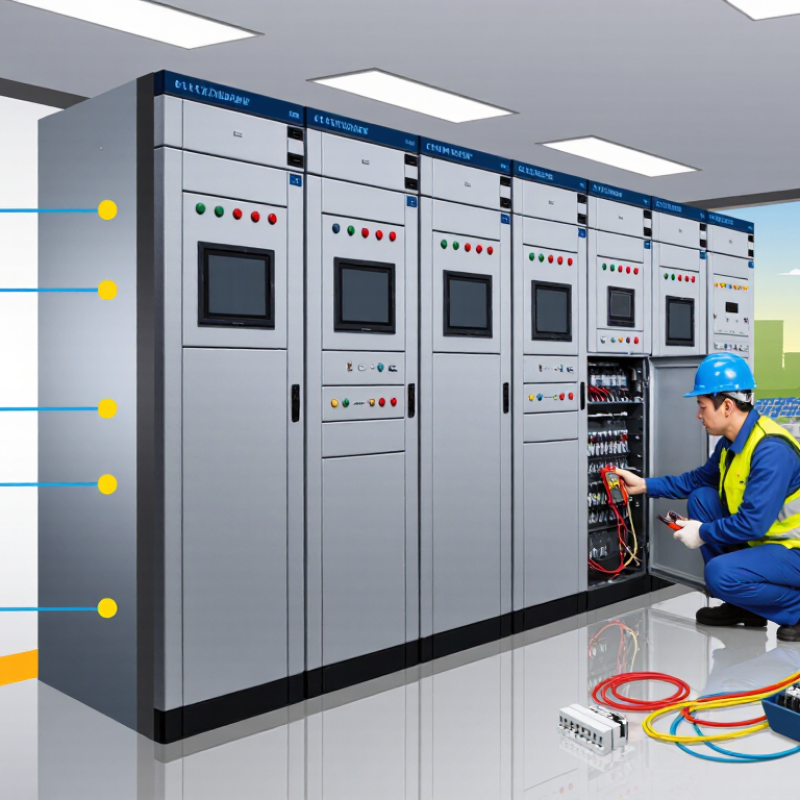
A China Switchgear Protection solution is an engineered package for detecting faults and isolating damaged circuits. It may combine circuit breakers, protection relays, current transformers, voltage transformers, busbar protection, and monitoring devices. The enclosure matters too. It must control heat, moisture, dust, and access around energized equipment. In practical projects, the solution connects electrical protection with safe operation, testing, and maintenance procedures.
Engineers normally begin with network voltage, short-circuit level, load profile, grounding method, and installation environment. They then coordinate relay settings with upstream and downstream devices. Poor coordination can trip an entire workshop for one feeder fault. For a medium-voltage panel, commissioning should include wiring checks, insulation tests, secondary injection, breaker timing, and trip-circuit verification. Clear drawings and labeled terminals save time during an emergency. They support later inspections.
A dependable solution follows applicable national and international electrical requirements, with documented test records and traceable components. It should let operators view alarms, fault codes, and event records without opening the cabinet. Arc-flash risk, battery failure, sensor drift, and communication loss need specific checks. Remote monitoring is useful, but it cannot replace local protection. There is no universal best design. Field reviews often find technically sound panels weakened by rushed settings or incomplete training. That weakness is easy to underestimate. Regular review is necessary when loads, cables, or operating conditions change.
How China Switchgear Protection Systems Work
What Is the Best China Switchgear Protection Solution?
How China Switchgear Protection Systems Work
A switchgear protection system acts like a fast electrical gatekeeper. Current transformers measure load and fault current. Protection relays compare these signals with approved settings. When abnormal current appears, the relay sends a trip command. The circuit breaker then isolates the damaged section, often within milliseconds. Interlocking prevents unsafe switching sequences. Ground-fault protection also limits dangerous current paths.
Modern Chinese projects face changing power flows. The IEA’s Renewables 2024 report states that China provided nearly 60% of global renewable capacity additions in 2023. Solar and wind inputs can shift rapidly. Therefore, protection settings must handle reverse power, voltage variation, and short-circuit changes. The IEA Electricity 2024 report also projected global electricity demand growth of about 4% in 2024. More demand means more pressure on distribution equipment. A relay can be technically correct, yet poorly coordinated. That weakness is easy to miss.
Tips: Check relay coordination with real fault studies. Test trip circuits, breaker timing, and backup protection. Record every setting change. IEC 62271 guidance supports reliable high-voltage switchgear design, while IEEE protection practices help verify selectivity. Never rely on factory defaults. A perfect setting does not exist. Field conditions change. Cable length, transformer impedance, and distributed generation can alter fault levels. Protection engineers should review event records after commissioning, not only after a failure. Small testing gaps can become expensive lessons.
Key Components of Switchgear Protection Solutions
What Is the Best China Switchgear Protection Solution?
A dependable switchgear protection solution begins with correctly matched components. The circuit breaker interrupts fault current quickly and safely. Protective relays detect overloads, short circuits, and abnormal voltage. Current transformers and voltage transformers provide accurate signals for relay decisions. Their ratio, insulation level, and accuracy class require careful selection. Small errors here can delay tripping.
The busbar system carries power between incoming and outgoing circuits. Insulated supports must withstand thermal and mechanical stress during faults. Earthing equipment provides a controlled path for fault energy. Interlocking devices prevent unsafe switching sequences. Arc-flash sensors can shorten reaction time when light and pressure rise suddenly. In dusty or humid facilities, sealed enclosures and suitable ingress protection are essential. Conditions matter greatly.
A complete solution also needs monitoring and testing. Temperature sensors can reveal loose connections before failure. Communication modules help operators review alarms and event records. Protection settings should reflect actual loads, cable sizes, and coordination requirements. Factory testing is useful, but field commissioning remains necessary. A relay may be correctly programmed and still receive poor transformer signals. That weakness is easy to overlook. Regular injection tests, insulation checks, and breaker timing tests improve confidence. Yet no design is flawless; maintenance records often expose practical problems that calculations miss.
How to Choose the Best China Switchgear Solution
Choosing the best China switchgear solution requires more than comparing quotations. China’s installed power capacity exceeded 3.3 TW by the end of 2024, according to China Electricity Council statistics. This scale increases pressure on protection coordination, maintenance access, and delivery reliability. The IEA Electricity 2024 report also forecasts strong electricity-demand growth through 2026, especially across Asia. Specify the operating environment before selecting equipment. Record voltage, fault current, altitude, humidity, temperature, seismic conditions, and switching frequency.
Ask for verified type-test evidence under IEC 62271-200 and applicable GB/T requirements. Check internal arc classification, insulation levels, short-time withstand current, mechanical endurance, and protection relay compatibility. A practical factory audit should review routine-test records, copper-busbar workmanship, enclosure sealing, and spare-parts control. Field experience shows that unclear interface drawings often create more risk than the main cabinet itself. Keep protection settings traceable from the calculation report to the commissioning sheet.
Do not choose only by initial price. A cheaper panel may require longer outages or expensive retrofits. No checklist is perfect. I would also challenge the supplier’s promised delivery date, especially for customized relays, sensors, and interlocking systems. Reliable after-sales support needs local engineers, clear response times, and training for operators. CIGRE technical guidance emphasizes system coordination, not isolated component performance. That point is easy to overlook.
How to read this chart: These evaluation weights reflect the main technical and lifecycle factors commonly considered when selecting a switchgear protection solution. Compliance, protection coordination, arc-flash risk reduction, reliability, monitoring, and total cost should be assessed together rather than judged by purchase price alone.
Standards, Safety, and Maintenance Requirements
The best China switchgear protection solution begins with standards, not hardware selection. In China, projects should align with applicable GB/T requirements, such as GB/T 11022 and GB/T 3906, while using IEC 62271 for international design consistency. Protection studies must verify short-circuit ratings, relay coordination, grounding, insulation levels, and breaker interrupting capacity. Interlocks should prevent unsafe switching sequences. Arc-flash labels and remote operation can further reduce exposure during energized work.
Maintenance is equally important. NFPA 70B recommends documented, risk-based electrical maintenance, while NETA testing practices support inspections, contact-resistance tests, insulation checks, and relay verification. Uptime Institute’s 2024 Annual Outage Analysis reported that 54% of surveyed outages caused losses above $100,000. That figure is not switchgear-specific, but it shows why preventive work deserves budget protection. In field reviews, loose terminations and neglected battery systems still appear too often. A checklist can miss them.
Tips: Record torque values, infrared images, relay settings, and test dates. Inspect before faults occur. Keep spare fuses, trip coils, and control-power components in a controlled store. Recheck protection settings after any transformer, cable, or load change. Do not rely only on factory certificates; site conditions can differ. Review the maintenance interval yearly, because fixed schedules are convenient, but not always correct.